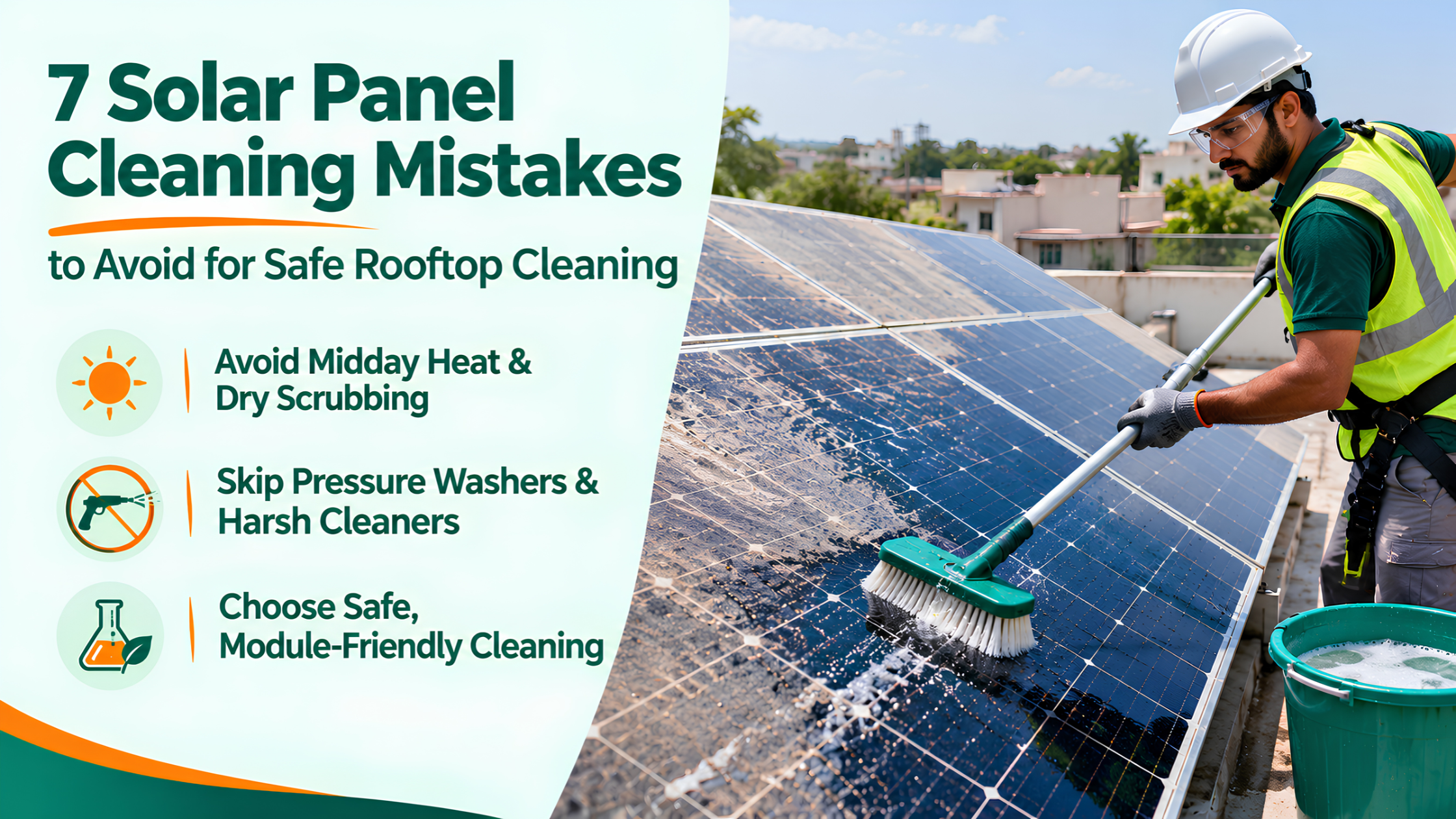
| Cleaning rooftop solar panels sounds simple: grab a bucket and a brush. But a few common habits can leave streaks, scratch the glass, damage coatings, or put you at risk on the roof.
Here are the seven mistakes we see most often while cleaning rooftop solar panels in Indian homes and societies, why each one hurts, and what to do instead. |
QUICK ANSWER
The seven most common mistakes while cleaning rooftop solar panels are cleaning in midday heat, dry-wiping or using abrasive tools, using a pressure washer, choosing the wrong cleaning liquid, rinsing with hard water, ignoring manufacturer guidelines and neglecting roof safety. Clean in the cool hours with soft tools, low-pressure water and a non-acidic, phosphate-free solar cleaner. The right solar panel cleaning chemical, such as Solargent, removes several of these mistakes at once. |
|
7
Common mistakes to avoid
|
|
|
0
pressure washers needed
|
|
|
1
right cleaner fixes many
|
|
📋 The 7 Mistakes at a Glance
| Mistake |
Why it hurts |
Do this instead |
| 1. Midday cleaning |
Liquid dries fast and leaves streaks |
Clean in the early morning or evening |
| 2. Dry-wiping and abrasives |
Dust and hard tools scratch the glass and coating |
Rinse first, then use soft tools |
| 3. Pressure washer |
Can damage coatings and force water into edges |
Use a gentle spray or hose |
| 4. Wrong cleaning liquid |
Leaves film or can harm coatings and frames |
Use a non-acidic, phosphate-free solar cleaner |
| 5. Hard water, no final rinse |
Leaves white mineral marks and residue |
Rinse thoroughly with clean, low-mineral water |
| 6. Ignoring guidelines |
Risks damage and warranty disputes |
Follow the module manual and installer advice |
| 7. Poor safety |
Falls, cracked cells and strained cables |
Never walk on panels; hire help for risky roofs |
Cleaning guides from solar companies point the same way: SunPower advises against hot or dirty water, abrasive tools, harsh-chemical detergents and cleaning panels when they are hot, and Aurora Solar says rinsing hot panels with cool water can, in rare cases, cause thermal shock and surface cracking.
1. Cleaning Rooftop Solar Panels in the Midday Sun
Hot glass dries cleaning liquid in seconds, leaving streaks, spots, and residue. Rinsing very hot glass with cold water can also stress it, and working on a baking roof is uncomfortable and unsafe.
| Do this instead: Clean in the early morning or evening when the glass is cool. Our guide to protecting solar panels in peak summer explains how Indian summer heat and dust affect your panels. |
2. Dry-Wiping or Scrubbing with Abrasive Tools
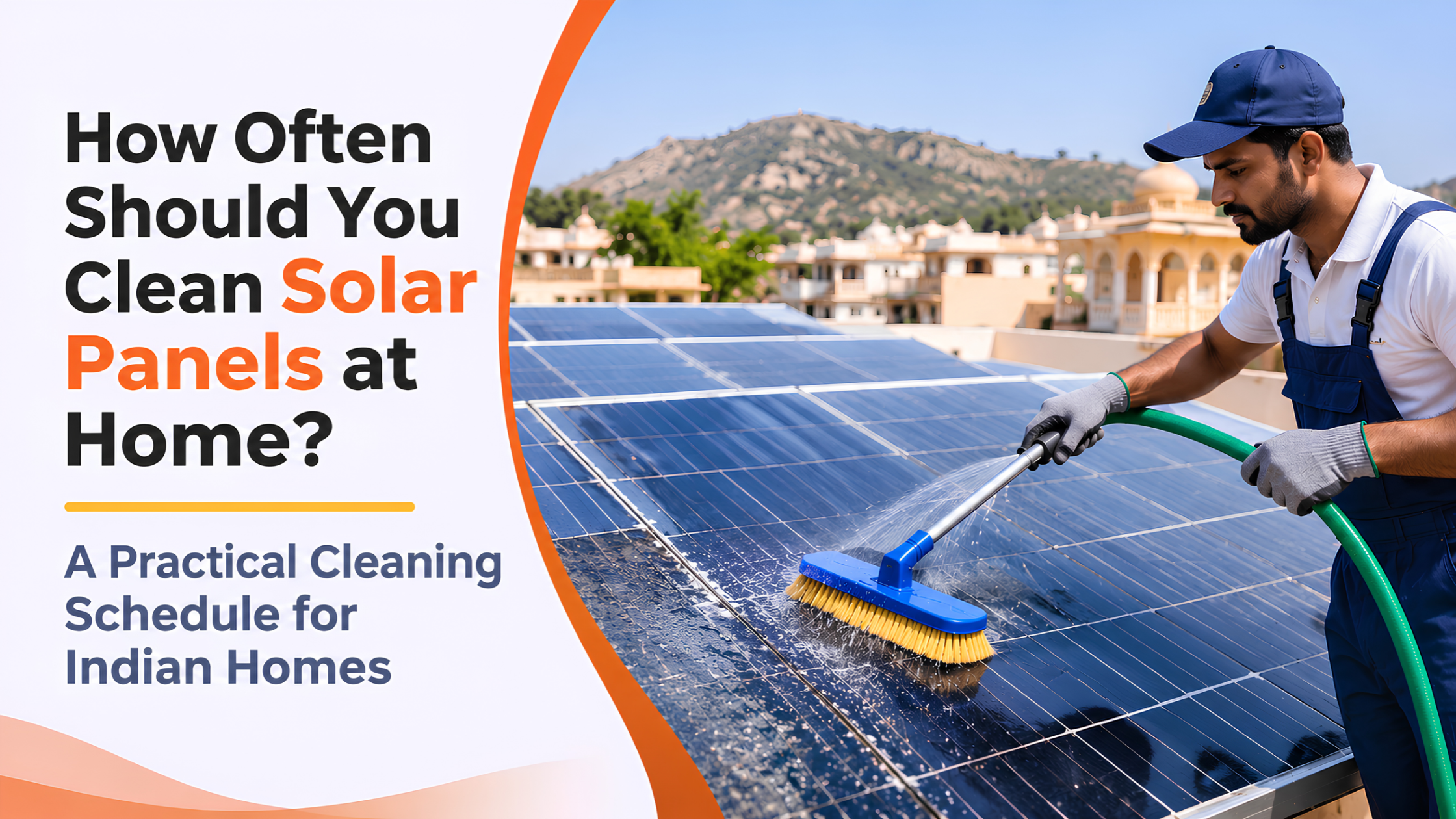
Dry dust acts like fine sandpaper when you drag a cloth across it. Hard brushes, steel wool, scouring pads and scrapers can scratch the glass and wear away the anti-reflective coating that helps panels capture light.
| Do this instead: Rinse loose dust off first with low-pressure water, then use a soft brush, microfibre cloth or nylon scrubber. |
3. Using a High-Pressure Washer on Solar Panels
A pressure jet can strip coatings, loosen seals and push water into edges, junction areas and connectors. It also tempts people to skip proper soaking and let force do the work.
| Do this instead: Use a gentle spray or hose, and let a cleaning liquid loosen the dirt instead of force. |
4. Using the Wrong Cleaning Liquid
Dishwashing liquid, floor cleaners, strong acids, bleach, and harsh glass cleaners can leave a soapy film or residue, attract dust, and may harm frames, seals or coatings. Homemade mixes are hard to control and are not designed for solar glass.
| Do this instead: Choose a product made for solar modules: non-acidic, phosphate-free, and module-friendly. Solargent’s solar panel cleaning chemical is formulated for Indian dust and pollution and is used on module glass as directed on the label. |
5. Rinsing with Hard Water or Skipping the Final Rinse
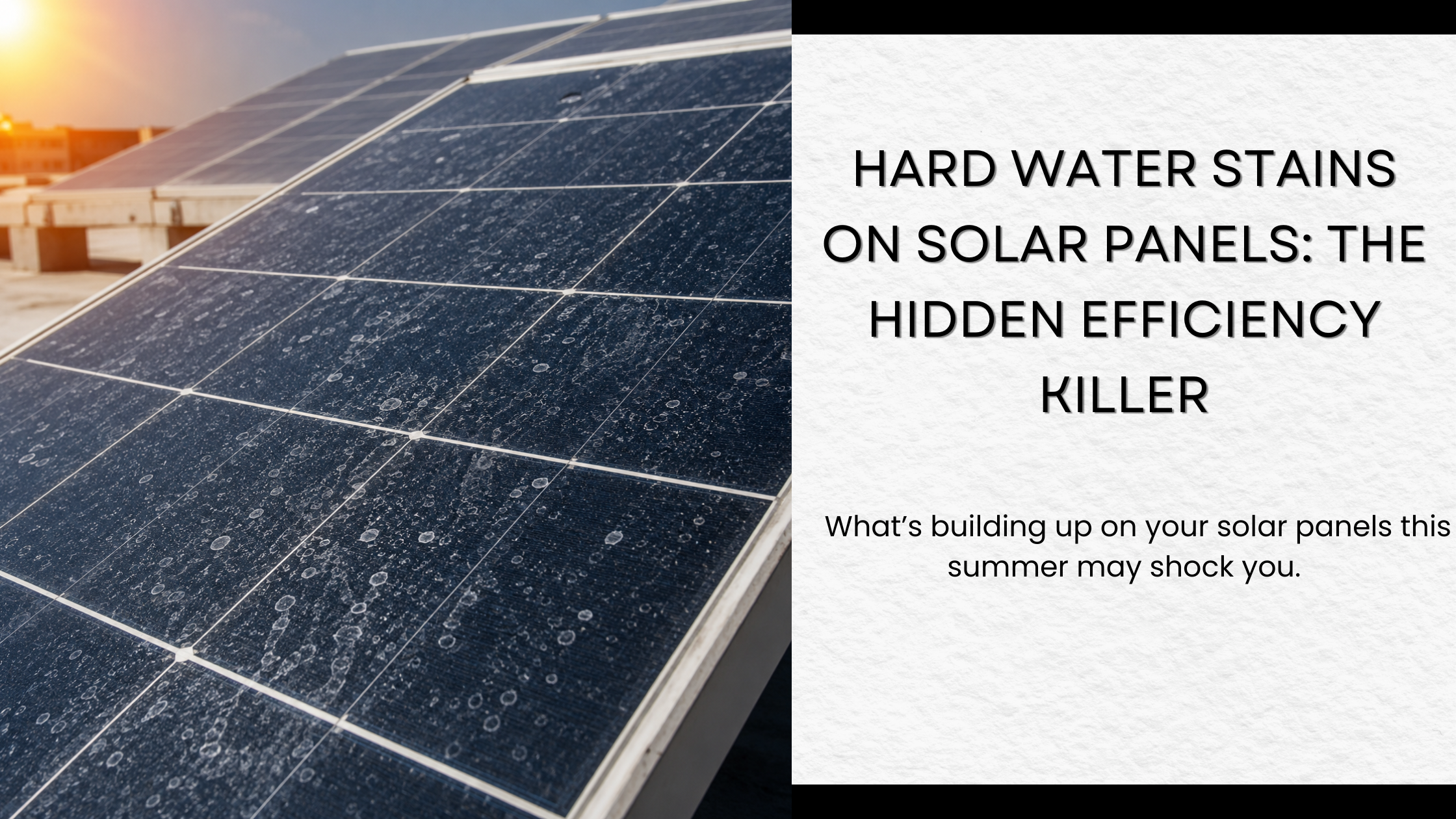
Hard water leaves white mineral marks as it dries, and unrinsed cleaner can dry into a film. These marks block light just like dirt does. We explain how this builds up in our article on hard water stains on solar panels.
| Do this instead: Finish with a thorough rinse using clean, low-mineral water where possible, and let the glass air dry. |
6. Ignoring Manufacturer and Installer Guidelines
Every module and mounting system has its own care rules. Skipping them can lead to avoidable damage or disputes over warranty claims. Warranty terms vary by manufacturer.
| Do this instead: Read your module manual and ask your installer which tools, products, and water pressure they approve. |
7. Neglecting Roof and Electrical Safety
Slippery roofs, steep angles and poor access cause real accidents. Standing or walking on panels can also crack cells, and rough handling can strain cables and connectors.
| Do this instead: Never step on panels, use a long-handle soft brush from a safe position, work in dry conditions and hire a trained professional for steep, high or large installations. |
|
Do
✔ Clean in the cool hours
✔ Rinse first, then wipe with soft tools
✔ Use a non-acidic, phosphate-free solar cleaner
✔ Follow the manual and stay safe on the roof
|
|
|
Don’t
✘ Dry-wipe dusty glass
✘ Use steel wool, scrapers or pressure washers
✘ Use dishwash liquid, bleach or harsh glass cleaners
✘ Walk or kneel on the panels
|
|
✨ How the Right Solar Panel Cleaning Chemical Helps You Avoid These Mistakes
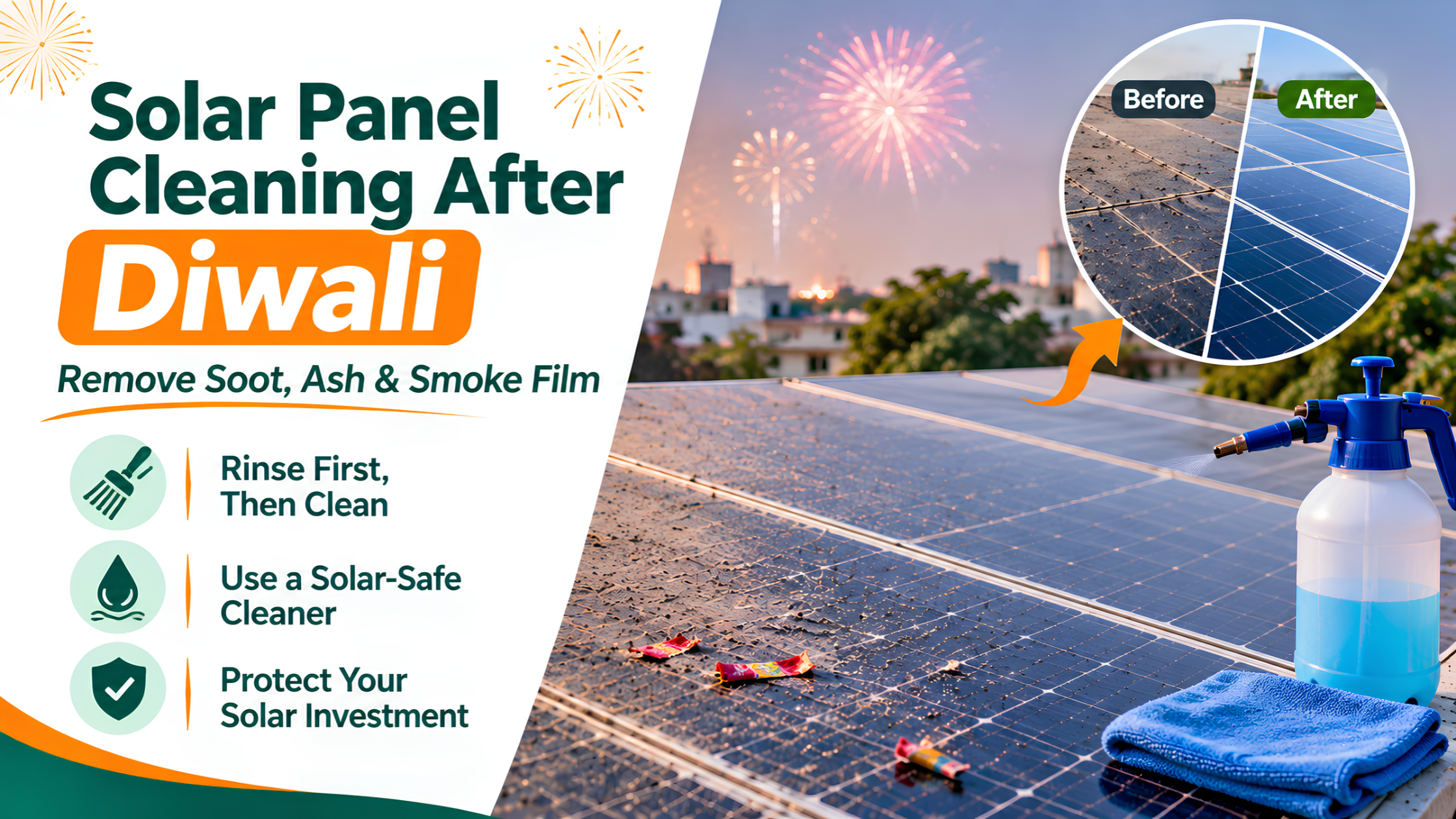
Most of these mistakes happen because people reach for force, heat, or household products to make up for a weak cleaner. A purpose-made solar panel cleaning chemical lets the product do the work. Solargent is developed for Indian dust, pollution and humidity, and it helps in these ways:
| ✔ |
Streak-free, residue-free cleaning, so a missed rinse or a warm roof is less likely to ruin the finish |
| ✔ |
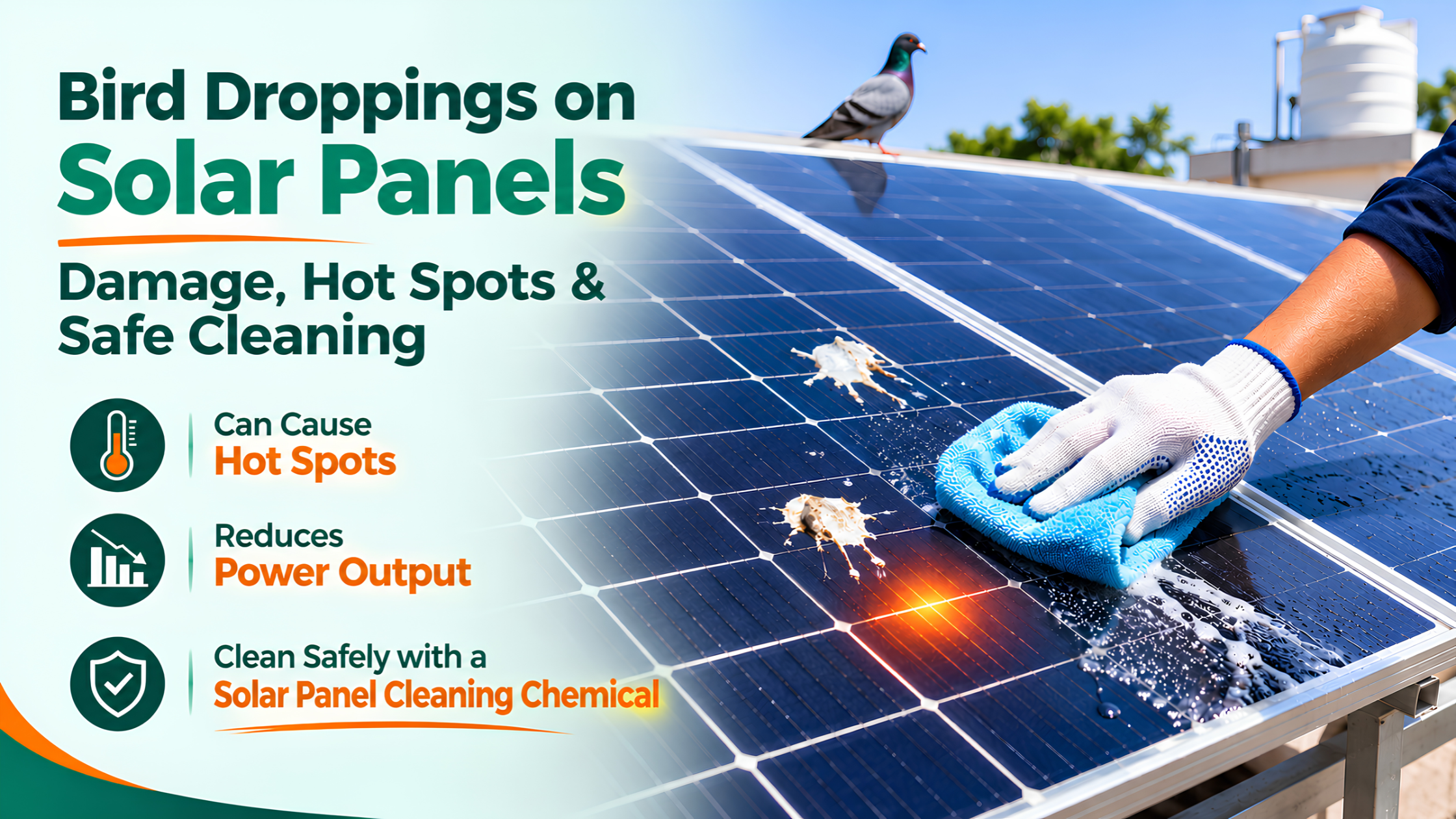
Deep cleaning of dust, bird droppings, pollution buildup, and flashover residue, so you do not need hard scrubbing or pressure washing |
| ✔ |
A non-acidic, phosphate-free, module-friendly formula, so you are not guessing with household products |
| ✔ |
An eco-friendly, biodegradable formula that helps reduce water usage |
Choose your formula
|
🧴
Solargent RTU
Ready to use, no mixing. Spray directly, brush gently and rinse. Ideal for home rooftops and societies. 2-litre and 5-litre packs on Amazon India.
Buy Solargent RTU |
|
|
🏭
Solargent C
Concentrated, high-strength formula for commercial plants, O&M teams and large solar farms. Follow the usage instructions on the pack.
Buy Solargent C |
|
Bulk packs: a 10-litre pack and 20, 35 and 50-litre drums are available on enquiry.
|
Key Takeaways
| ✔ |
Clean in the early morning or evening, never on hot glass. |
| ✔ |
Rinse first and use only soft tools: no dry wiping, steel wool or scrapers. |
| ✔ |
Skip the pressure washer and let the cleaning liquid do the work. |
| ✔ |
Use a non-acidic, phosphate-free, module-friendly cleaner instead of household detergents. |
| ✔ |
Follow your manufacturer’s guidelines and put roof safety first. |
| ✔ |
Choose a purpose-made solar panel cleaning chemical such as Solargent so the product, not force, does the heavy lifting. |
|
|
“
Gentle tools, cool glass and the right liquid beat force every time.
|
❓ Frequently Asked Questions About Cleaning Rooftop Solar Panels
Q: Can I clean rooftop solar panels with household dishwashing liquid?▾
It is not recommended, because household detergents often leave a film and are not designed for solar glass. A non-acidic, phosphate-free cleaner such as Solargent RTU is made for solar panels and is easier to rinse clean. Always follow your module manufacturer’s cleaning guidelines.
QIs a pressure washer safe for solar panels?▾
No. High pressure can damage coatings and seals and push water into places it should not go. A low-pressure hose, a soft brush and a cleaning liquid like Solargent loosen dirt without the force.
QShould I clean solar panels in the afternoon sun?▾
No. Clean in the early morning or evening when the glass is cool. Hot glass dries liquid quickly and leaves streaks. Solargent’s guidance is to avoid direct harsh sunlight while cleaning.
QCan I use vinegar or homemade mixes on solar panels?▾
Homemade and acidic mixes are not recommended as a regular method. Their strength is hard to control, and they can leave residue. A ready-made, non-acidic, phosphate-free product like Solargent RTU is a more predictable choice for regular cleaning.
QDo I need to switch off my solar system before cleaning?▾
Follow your installer’s and manufacturer’s instructions for your system. Panels are built to live outdoors, but keep water and tools away from cables, connectors and junction areas, and never clean a system with damaged or exposed wiring yourself. Call a professional when in doubt.
QIs it okay to walk on solar panels while cleaning?▾
No. Walking or kneeling on panels can crack cells and glass. Use a long-handle soft brush from the roof surface or a safe access point. For hard-to-reach arrays, a professional cleaner is the safer route.
QWhat is the best way to clean rooftop solar panels at home?▾
Rinse loose dust, apply a solar cleaning liquid, wipe gently with a soft brush, and rinse again during the cool hours. Solargent RTU is ready to use: spray it on, use a nylon scrubber or soft brush, then wash with clean water. No mixing is required.
QCan the wrong cleaning method void my solar warranty?▾
It can, because warranty terms differ and some manufacturers restrict certain tools or products. Check your module manufacturer’s guidelines and follow the instructions on the Solargent label. If you are unsure, ask your installer before you clean.
QIs Solargent safe to use on solar panels?▾
Solargent is a non-acidic, phosphate-free, eco-friendly, biodegradable and module-friendly solar panel cleaning chemical developed for Indian conditions. Use it as directed on the pack and follow your module manufacturer’s cleaning guidelines.
QDo I need to dilute Solargent before use?▾
Solargent RTU is ready to use, so no mixing is needed: spray it directly on the panels. Solargent C is a concentrated formula, so follow the usage instructions on the pack. If you are unsure which one suits you, contact the Solargent team.
Final Word: Clean Smart, Not Hard
Most cleaning damage comes from rushing or using the wrong tool, not from cleaning itself. Keep it gentle, keep it cool and keep it safe. The easiest way to get all three right is to start with a cleaner built for solar glass, which is exactly what Solargent is made for. For more practical guides, visit the Solargent blog.
|
Not Sure Which Cleaner Is Right for Your System?
Choose Solargent RTU for your home rooftop or Solargent C for your plant. Order on Amazon India, or contact us and we will help you choose.
Get a Free Quote
|
Follow Solargent: Facebook · Instagram