| Ask ten rooftop solar owners how often they clean their panels, and you will hear ten different answers. That is because the right schedule depends on where you live, what surrounds your roof, and what the season is doing to your glass.
In India, the picture changes month by month: pre-monsoon dust storms, rain streaks, festival-season smoke and winter fog each leave a different kind of dirt. This guide answers how often you should clean solar panels at home and gives you a simple baseline schedule, a month-by-month calendar and clear signs that your panels need attention now. |
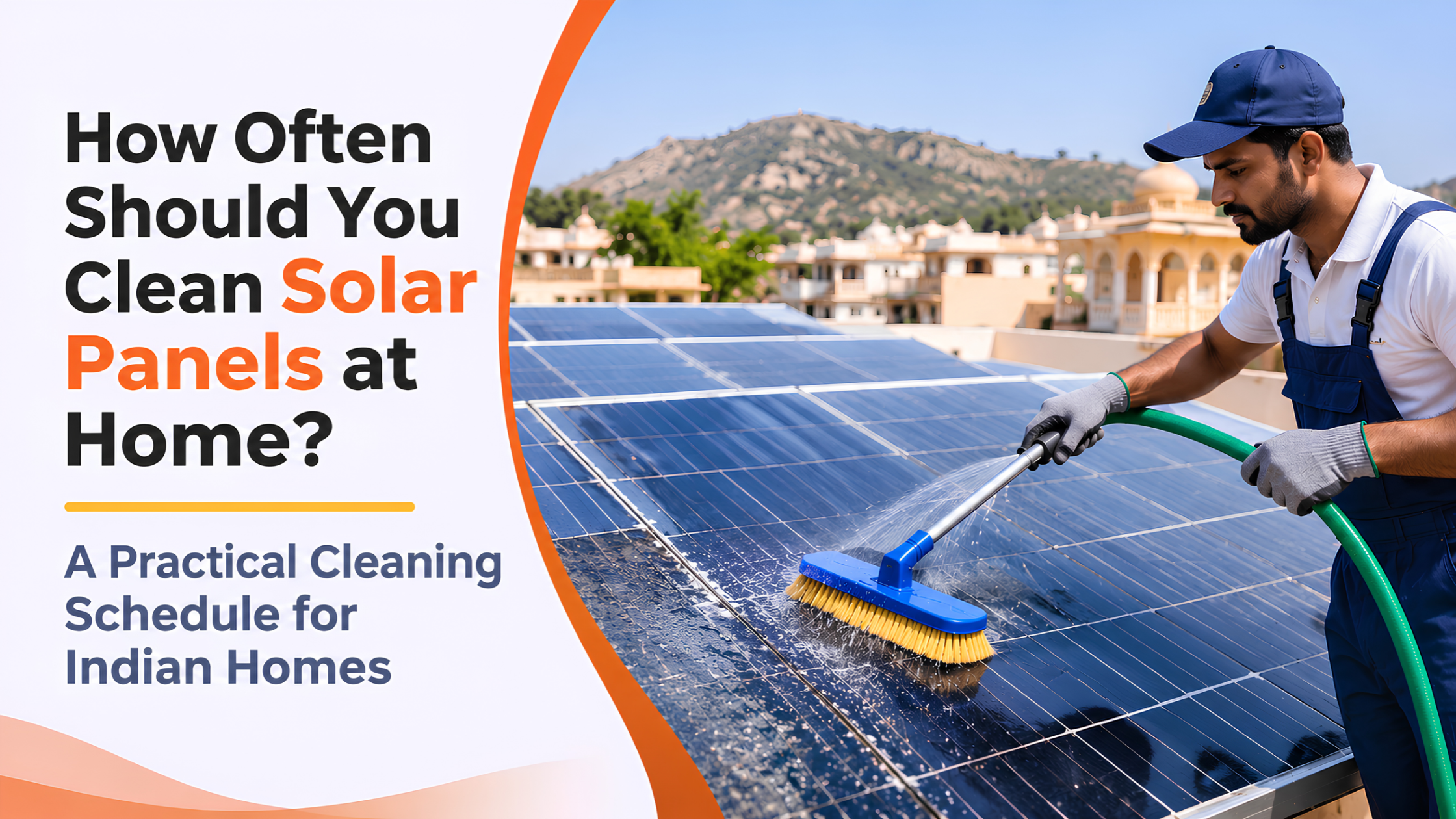
| Quick answer: For most Indian homes, you should clean solar panels at home by rinsing them with clean water once or twice a month and doing a deeper clean with a solar-safe cleaning liquid once or twice a year. Clean more often near construction, highways, farms or industry, and always after a dust storm, heavy bird droppings or Diwali smoke. For the deep clean, a purpose-made solar panel cleaning chemical such as Solargent removes the bonded dirt that plain water leaves behind. |
|
1–2×
water rinses per month
|
|
|
1–2×
deep cleans per year
|
|
|
0.3–0.6%
daily soiling loss reported in Delhi
|
|
The Short Answer: A Simple Baseline Schedule for Cleaning Solar Panels
If you want one schedule to start with, use this one and adjust it to your surroundings.
|
|
Light rinse: once or twice a month
Use clean water and a soft brush or microfibre cloth. |
|
|
Deep clean: once or twice a year
Do it sooner if a film stays after rinsing. Use a non-acidic solar panel cleaning liquid, a soft brush and clean water. |
|
|
Event-based clean: after dust storms, heavy droppings, nearby construction or Diwali smoke
Rinse first, then use cleaning liquid only if dirt stays. |
|
|
Performance check: a quick weekly look at your inverter or app
Compare kWh with a day of similar weather. |
Plain water removes loose dust, but it often leaves bonded grime, pollution film and droppings behind. That is why a dedicated solar panel cleaning chemical is worth using for the deep clean, while water handles the routine rinses.
| Pro tip: Dust and pollution losses vary a lot by location, so track your own generation instead of guessing. The sourced figures later in this guide show why. |
Why One Schedule Does Not Fit Every Indian Home
Two houses in the same city can need different cleaning calendars. These are the factors that matter most:
| Factor |
What it does to your panels |
| Dust and soil |
Roofs near unpaved roads, construction sites or farmland collect dust faster than roofs in leafy residential colonies. |
| Pollution and traffic |
Metro and industrial areas add soot and oily film that water alone does not lift. |
| Rainfall |
Heavy rain rinses loose dust, but light showers often spread it into streaks and mud spots. |
| Panel tilt |
Flatter panels hold dust and droppings longer than steeply tilted ones. |
| Birds and trees |
Perches, trees and open water tanks nearby mean more droppings. |
| Coastal air |
Salt and humidity leave a sticky layer that builds up quickly. |
Starting points by location
| Where you live |
Suggested starting routine |
| Dry and dusty regions (Rajasthan, Gujarat, parts of Delhi NCR and Punjab–Haryana) |
Rinse every two weeks in dry months. |
| Metro and industrial areas |
Rinse every two to three weeks and plan two deep cleans a year. |
| Coastal areas |
Rinse every two to three weeks so salt does not build up. |
| Greener, low-dust suburbs |
A monthly rinse is usually enough. |
Treat these as practical starting points and adjust after you watch your own generation for a few weeks.
Month-by-Month Solar Panel Cleaning Calendar for India
Use this calendar as a guide. Conditions vary by region, so treat the actions as starting points rather than fixed rules.
| Month |
What is happening |
What to do |
| January |
Winter fog and dew in north India; smog mixes with dew into a sticky film. |
Rinse once in the cooler hours after the dew dries; use cleaning liquid if a film stays. |
| February |
Dry, clear weeks as dust starts to rise before summer. |
A good time for a deep clean before the high-generation months. |
| March |
Heat builds, and harvest-season dust drifts across farming belts. |
Rinse every two weeks, in the early morning or evening. |
| April |
Dust storms (aandhi) sweep across north and west India. |
Rinse after every storm instead of waiting for the next scheduled wash. |
| May |
Peak heat; droppings and dust bake onto the glass. |
Clean only in the early morning or evening. See our peak summer care guide. |
| June |
Pre-monsoon storms, then first showers that leave muddy streaks. |
Rinse after the first rain once the roof is dry enough to work on safely. |
| July |
Monsoon: rain removes loose dust but leaves streaks and film. |
Inspect from a safe spot and avoid climbing a wet roof. |
| August |
Humid weather; dirt can collect along the lower edge of panels. |
Check the lower edge and clean only on dry, safe days. |
| September |
Rain eases and panels often look streaky. |
Plan a post-monsoon deep clean for early October. |
| October |
Strong sun returns, dust returns, and there is no rain to wash it. |
One of the best months for a deep clean with cleaning liquid. |
| November |
Diwali smoke, ash and early smog. |
Rinse after the ash settles; deep clean if a grey film remains. |
| December |
Winter fog and smog; dew holds soot on the glass. |
Do one light clean and compare output with a clear day. |
| Key fact: In India, rooftop solar panels need a water rinse once or twice a month and a deep clean with a solar-safe liquid, such as Solargent, once or twice a year. Many homes find February and October convenient for the deep clean, with extra rinses after dust storms and Diwali smoke. |
How Much Does Dust Actually Cost Your Solar Panels?
Losses depend on your location, tilt and rainfall, so no single number fits every roof. Indian studies still show why regular cleaning matters:
| ● |
A paper presented at the 32nd European Photovoltaic Solar Energy Conference found that soiling in Delhi can cause losses of about 0.3 to 0.6 per cent per day (Renewable Watch summary). |
| ● |
An IIT Bombay researcher told pv magazine India that, without cleaning after October, soiling loss builds up at around 0.4 per cent per day (pv magazine India). |
| ● |
Technical assessments cited by pv magazine India say soiling can cut generation by up to 30 per cent in extreme arid, agricultural and industrial conditions (pv magazine India, 2026). |
These figures come from specific sites, mostly larger systems, so your rooftop may lose much less. That is why the best habit is to compare your own kWh before and after each clean.
Seven Signs You Need to Clean Solar Panels at Home Now
| ✔ |
A visible dust film, grey haze or streaks when you look along the glass |
| ✔ |
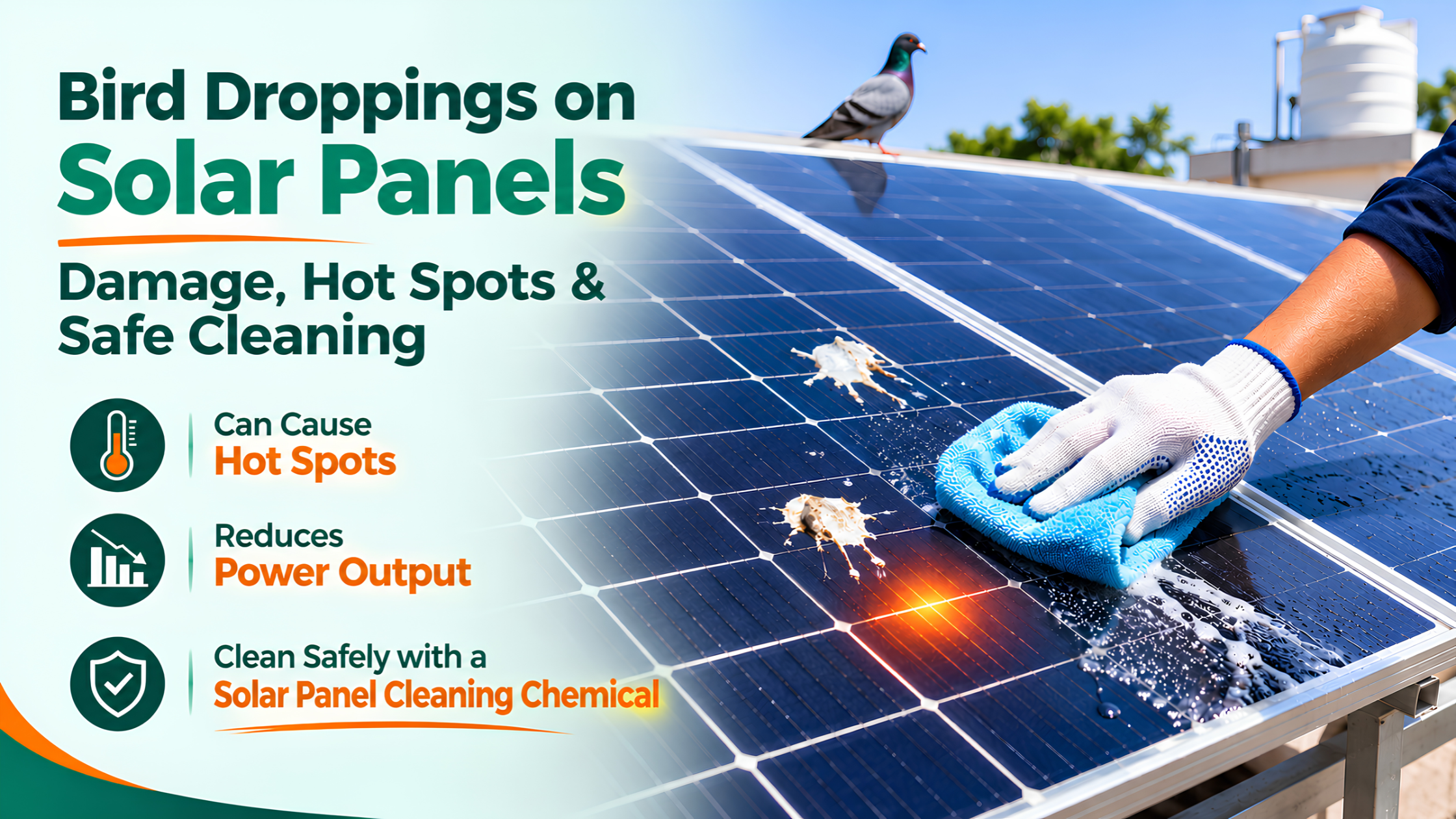
Bird droppings or dried mud patches |
| ✔ |
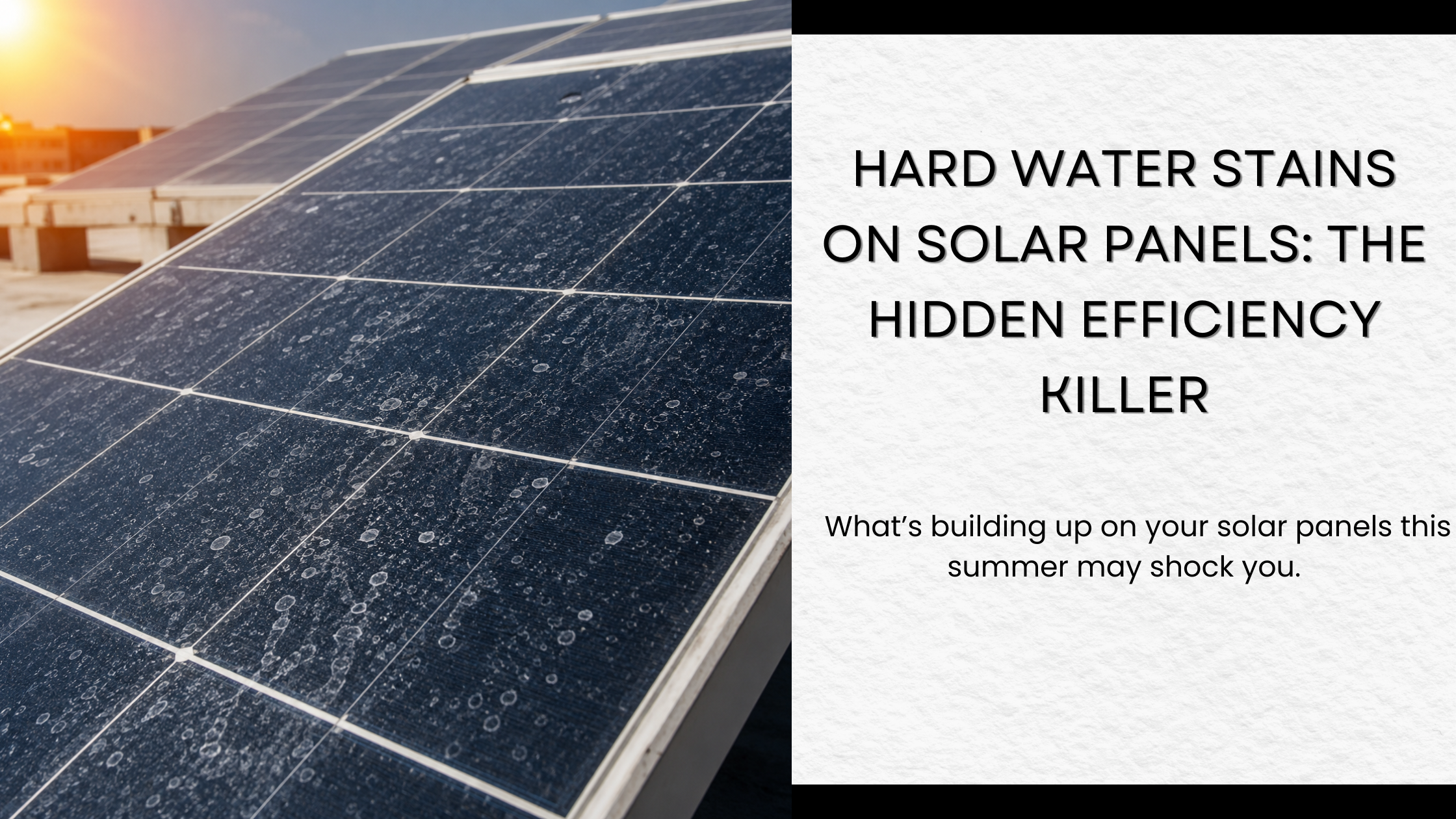
White, chalky marks after water dries (hard water residue) |
| ✔ |
Lower kWh than usual on a day with similar sunshine |
| ✔ |
Dirt left on the glass after rain |
| ✔ |
A dust storm, harvest or fresh construction nearby |
| ✔ |
A white cloth that picks up visible grime when wiped over a small patch |
| Watch out: Do not judge only by eye. A thin pollution film is hard to see from the ground, so keep an eye on your generation numbers too. |
How to Clean Rooftop Solar Panels in 6 Simple Steps
|
|
Step 1: Pick a cool time
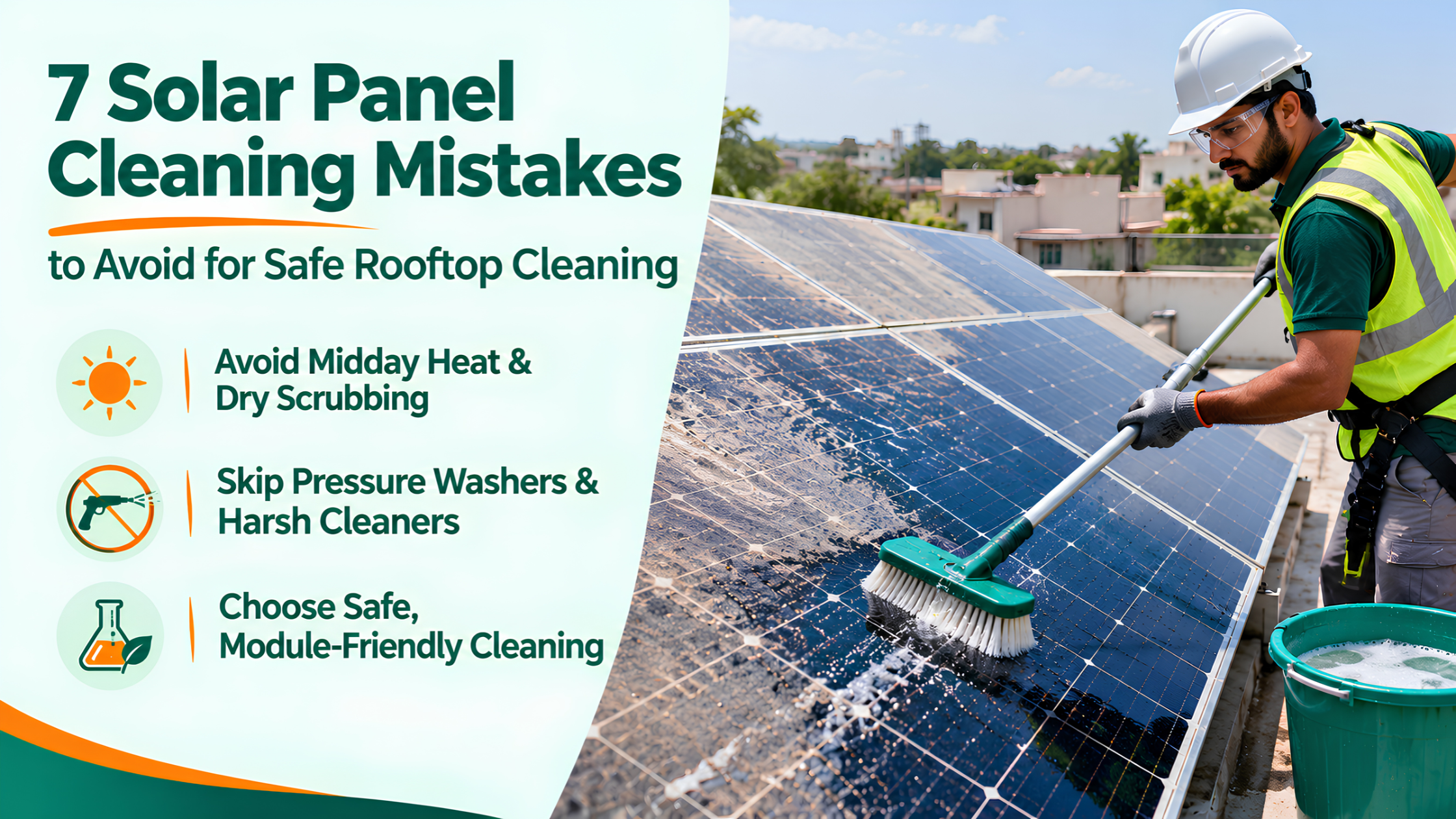
Clean in the early morning or evening, when the glass is cool. Midday sun dries liquid too fast and leaves streaks. |
|
|
Step 2: Stay safe
Work only on a dry, stable roof, never walk on the panels, and read your module manufacturer’s cleaning guidelines first. For steep or high roofs, call a professional. |
|
|
Step 3: Rinse off loose dust
Use clean, low-pressure water first so dry dust is not rubbed across the glass. |
|
|
Step 4: Apply the cleaning liquid
Spray it on and gently work it with a soft brush or nylon scrubber. A ready-to-use option such as Solargent RTU needs no mixing. |
|
|
Step 5: Rinse thoroughly
Wash away all residue with clean water so nothing dries into a film. |
|
|
Step 6: Let it air dry and check
Look for streaks or leftover patches and repeat on that spot only if needed. |
Cleaning Solar Panels Too Often or Too Rarely: Which Is Worse?
If you are wondering how often to clean solar panels at home, remember both extremes have a cost. Never cleaning lets dirt bake on and quietly cut your generation. Cleaning too often adds roof-climbing risk and unnecessary scrubbing.
| Habit |
What goes wrong |
| Too rarely |
Dirt bakes on, films build up, and generation drops without you noticing. |
| Too often |
More roof visits, more scrubbing and more risk for little extra gain. |
| The sweet spot |
A gentle routine rinse plus a deep clean when dirt stays behind, guided by your own output data. |
How Solargent Solar Panel Cleaning Chemical Makes Your Routine Easier
Water handles the routine rinses. For the deep clean, you need a product that lifts what water cannot. Solargent is a solar panel cleaning chemical developed in India for Indian operating conditions: heavy dust, industrial pollution, humidity and pollution-induced flashover residue. Read more about the Solargent cleaning chemical.
What you get with Solargent
| ✔ |
Deep, residue-free cleaning of dust, grime, bird droppings, pollution buildup and flashover stains, with a streak-free finish |
| ✔ |
A formula designed to keep panels cleaner for longer, so you can stretch the time between deep cleans |
| ✔ |
An eco-friendly, biodegradable and module-friendly formula that is non-acidic and phosphate-free |
| ✔ |
Less water used per clean |
| ✔ |
Suitable for rooftops, commercial systems, solar farms and power plants |
Choose your formula
| Formula |
Best for |
| Solargent RTU (ready to use) |
No mixing needed. Spray directly, brush gently and rinse. Best for home rooftops, residential and small systems. |
| Solargent C (concentrated) |
A high-strength formula for commercial plants, O&M teams and large solar farms. Follow the usage instructions on the pack. |
Where to buy: Solargent is on Amazon India in 2-litre and 5-litre packs, sold by Solargent. Buy Solargent RTU on Amazon India for your rooftop, or Solargent C on Amazon India for a plant. For a 10-litre pack, 20, 35 or 50-litre drums or custom packaging, contact the Solargent team directly.
|
Key Takeaways
| ✔ |
Rinse with clean water once or twice a month and deep clean once or twice a year. |
| ✔ |
Clean more often in dusty, polluted, coastal or bird-heavy areas. |
| ✔ |
Rinse after dust storms, droppings and Diwali smoke instead of waiting for the next scheduled clean. |
| ✔ |
Clean in the early morning or evening and never on hot glass. |
| ✔ |
Use a non-acidic, phosphate-free, module-friendly liquid and follow your manufacturer’s guidelines. |
| ✔ |
For deep cleans, use a purpose-made solar panel cleaning chemical: Solargent RTU for homes, Solargent C for plants. |
|
| Clean panels are the cheapest way to protect your solar generation. |
Frequently Asked Questions About Cleaning Solar Panels
How often should I clean solar panels at home in India?
Rinse rooftop solar panels with clean water once or twice a month and deep clean once or twice a year with a solar-safe liquid such as Solargent. Homes near construction, highways, farmland or industry may need a rinse every two to three weeks. Always clean after a dust storm, heavy bird droppings or Diwali smoke instead of waiting for the next scheduled wash.
Does rain clean solar panels?
Rain removes some loose dust, but it usually leaves streaks and a thin film of dirt behind. Light showers can turn dust into mud spots that dry on the glass. After the monsoon ends, a deep clean with Solargent or a similar solar-safe liquid restores clarity far better than relying on rain.
Is it fine to clean solar panels every week?
A gentle weekly rinse is not harmful, but most homes do not need it. Frequent scrubbing and roof visits add risk without much benefit. Weekly cleaning only makes sense in very dusty locations or during heavy bird activity. Otherwise, watch your generation numbers and clean when they drop.
What is the best time of day to clean solar panels?
Early morning or evening, when the glass is cool. Cleaning hot glass makes liquid dry quickly and leave streaks, and a baking midday roof is uncomfortable and unsafe to work on. Solargent’s guidance is to avoid direct harsh sunlight while cleaning.
Can I clean solar panels with only water?
Yes for loose dust, but water alone often leaves bonded dirt, pollution film and droppings behind. A solar cleaning liquid such as Solargent loosens these deposits so the glass dries clean. Use water for routine rinses and the liquid for periodic deep cleans.
How do I know my solar panels need cleaning?
Look for a visible dust film, droppings, white marks, or a drop in generation on days with normal sunshine. Compare your kWh with a similar-weather day from earlier in the month. If output is lower and the weather is the same, dirty glass is a likely cause.
How much does cleaning improve solar output?
It depends on how dirty the panels are. Published Indian studies report soiling losses of roughly 0.3 to 0.6 per cent per day in Delhi and up to 30 per cent in extreme dusty conditions, so the gain can be large in dusty areas. Track your own kWh before and after a Solargent clean to see your actual improvement.
Which cleaning liquid is safe for home solar panels?
Choose a non-acidic, phosphate-free, module-friendly liquid, such as Solargent RTU. Solargent RTU is ready to use, so there is no mixing: spray it on, use a soft brush or nylon scrubber, then rinse with clean water. Follow your module manufacturer’s cleaning guidelines and the instructions on the pack.
Which Solargent should I use for my home rooftop?
Solargent RTU is the right choice for home rooftops and small systems because it is ready to use and needs no mixing. Solargent C is the concentrated formula meant for commercial plants, O&M teams, and large solar farms.
Where can I buy Solargent solar panel cleaning chemical?
Solargent is available on Amazon India in 2-litre and 5-litre packs, sold by Solargent. For bulk requirements such as a 10-litre pack or 20, 35 and 50-litre drums, contact the Solargent team directly for pricing and custom packaging.
Final Word: Build a Routine, Not a Rush
The best way to clean solar panels at home is a routine, not a rush. A good cleaning routine is simple: rinse regularly, deep clean once or twice a year and react to events such as storms, droppings, and festival smoke. Add a quick weekly look at your generation numbers, and you will rarely be surprised by a drop in output. With a purpose-made cleaning chemical like Solargent for the deep clean, the whole routine takes less time, less water and less effort. For more practical guides, visit the Solargent blog.
|
Ready to Make Deep Cleaning Easier?
Choose Solargent RTU for your rooftop or Solargent C for your plant. Order on Amazon India, or contact us for bulk pricing and custom packaging.
Get a Free Quote
|
Follow Solargent: Facebook · Instagram