1. Why the Right Cleaning Solution Matters
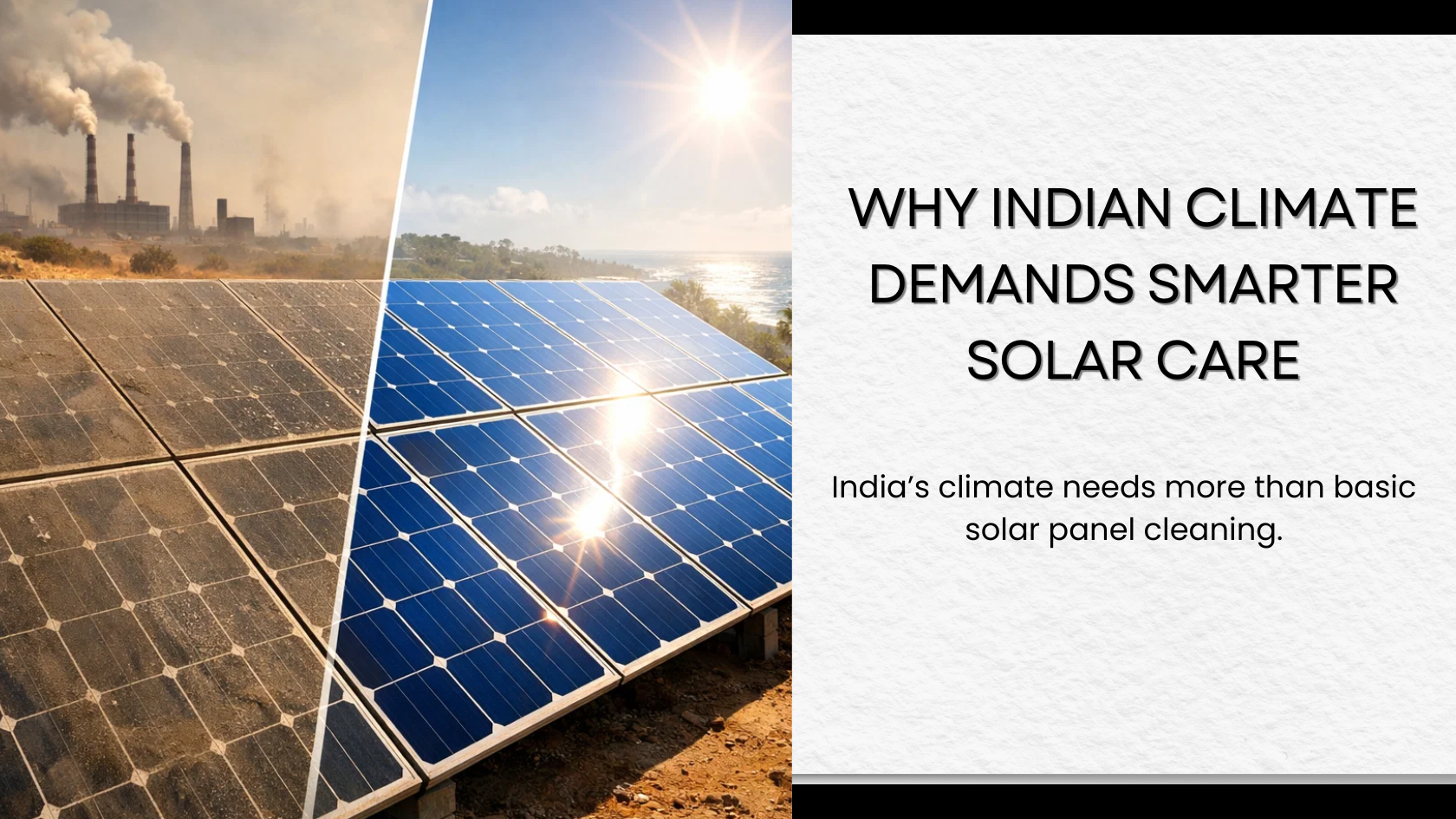
Solar panels silently convert sunlight into energy every day—but dust, bird droppings, and industrial pollution can quickly reduce their output.
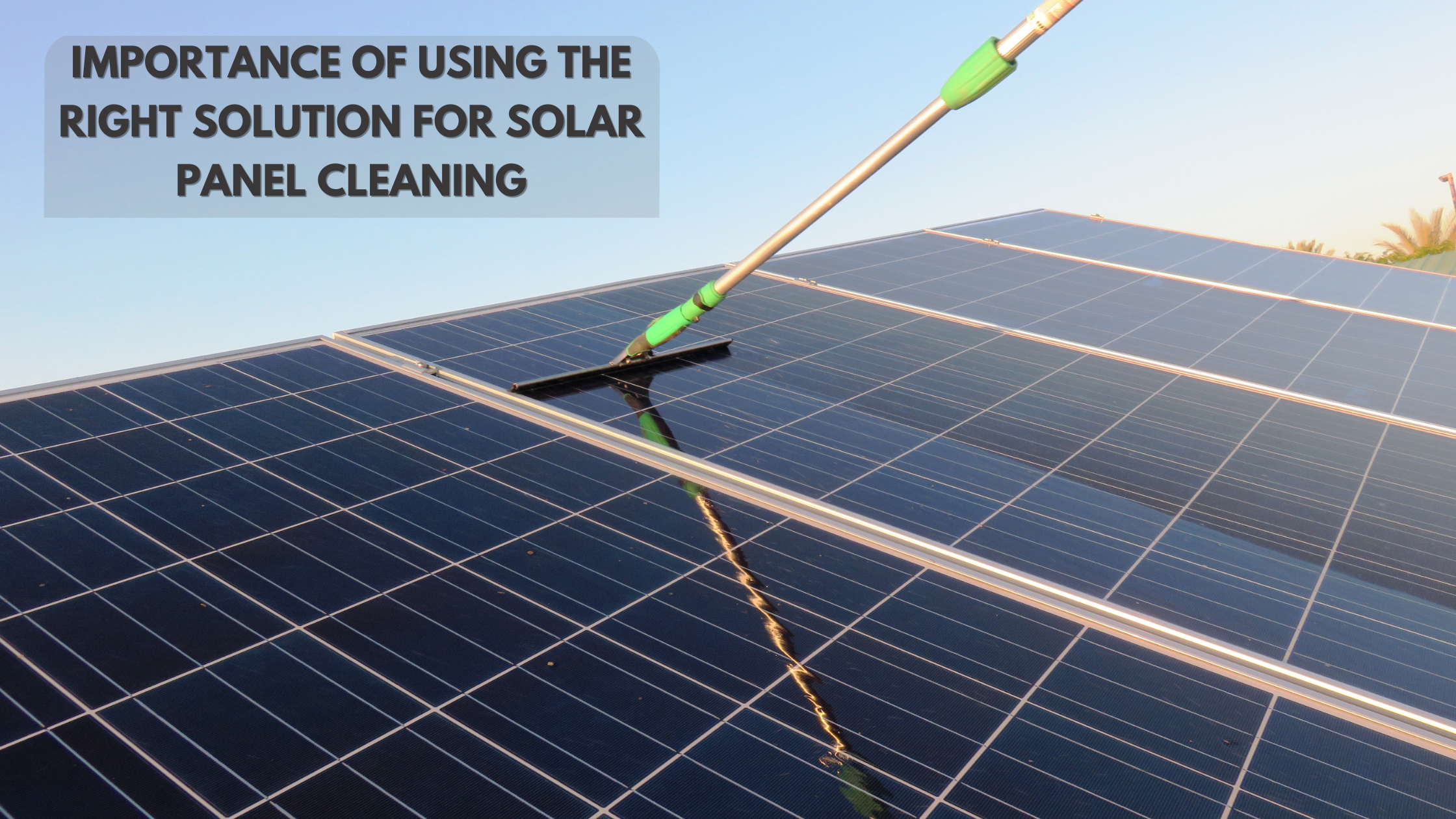
Many people assume plain water is enough to clean them, but water alone cannot remove sticky grime or cement dust. That’s why using the right solar panel cleaning chemical is essential. A professional solar cleaning solution not only restores clarity but also protects delicate coatings, ensuring long-term performance and efficiency
2. What Makes Solar Panels Hard to Clean
Cleaning solar panels may seem simple, but the combination of environmental pollutants, delicate surface components, and exposure to harsh weather makes the process surprisingly challenging. Panels accumulate layers of grime that water alone cannot remove, and improper cleaning methods can easily damage their sensitive coatings. Understanding these challenges is essential for maintaining long-term efficiency, preventing performance drops, and ensuring your solar investment delivers maximum energy output.
2.1 Sensitive Surface Coatings
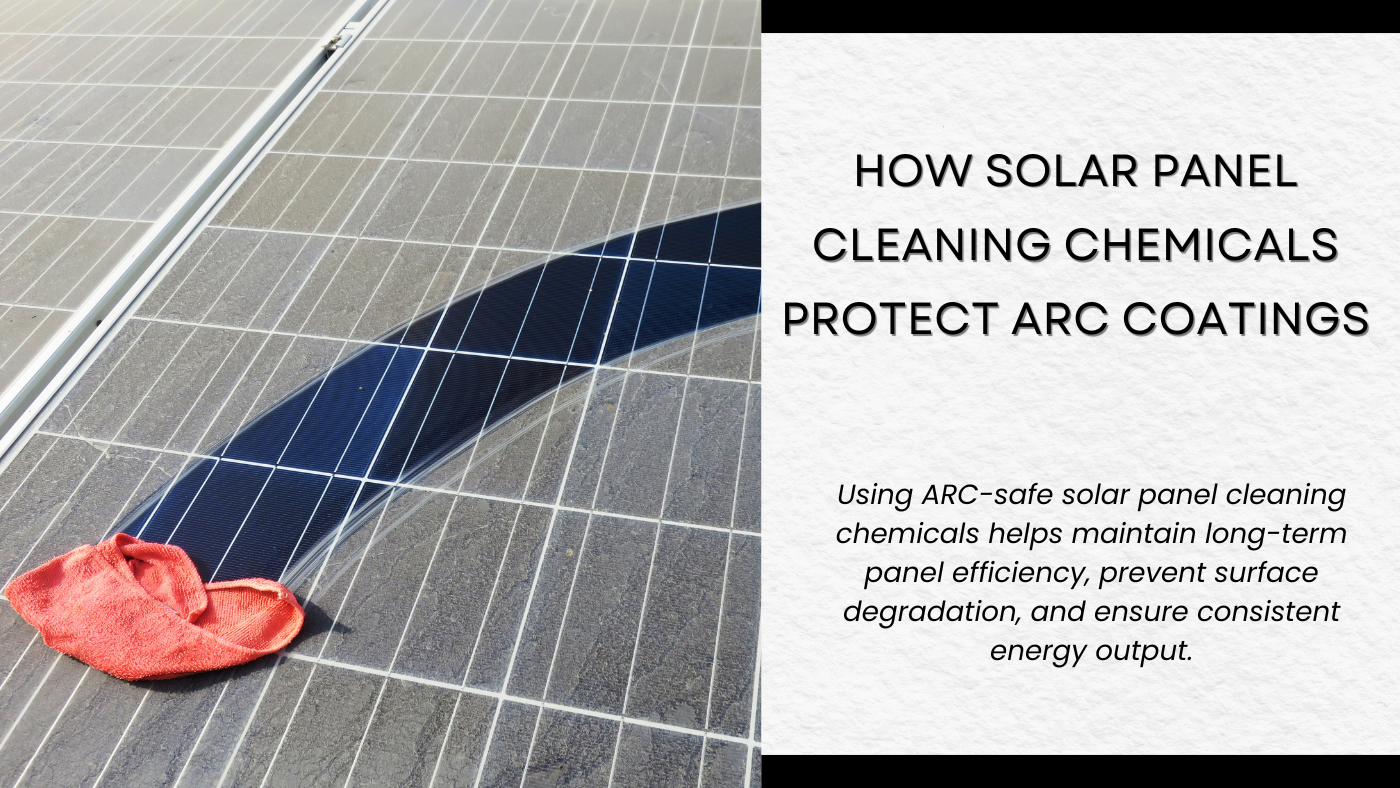
Solar panels are built with anti-reflective coatings and tempered glass that enhance sunlight absorption. Using harsh detergents or soaps can damage these surfaces, leading to permanent efficiency loss. The best solar panel washing liquids are non-abrasive, pH-balanced, and safe for delicate coatings—preventing micro-scratches and dullness.
2.2 Stubborn Dirt and Residue
Water can’t remove:
- Sticky bird droppings and organic residue
- Cement dust from nearby construction
- Industrial ash and smog particles
- Hard-water mineral stains
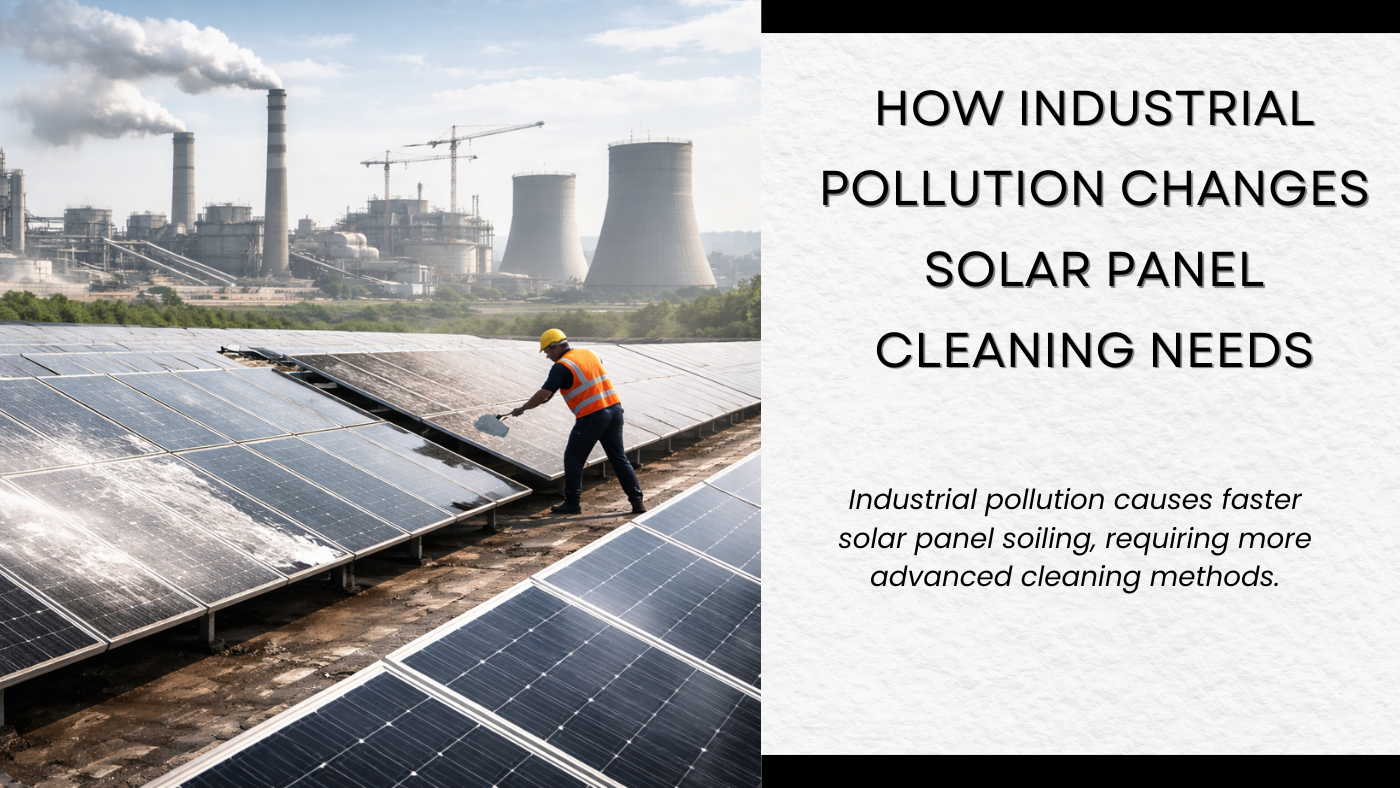
- Flashover marks caused by heat and pollution
These contaminants require specialised solar cleaning solutions to lift and dissolve grime safely.
3. Why Water Alone Isn’t Enough
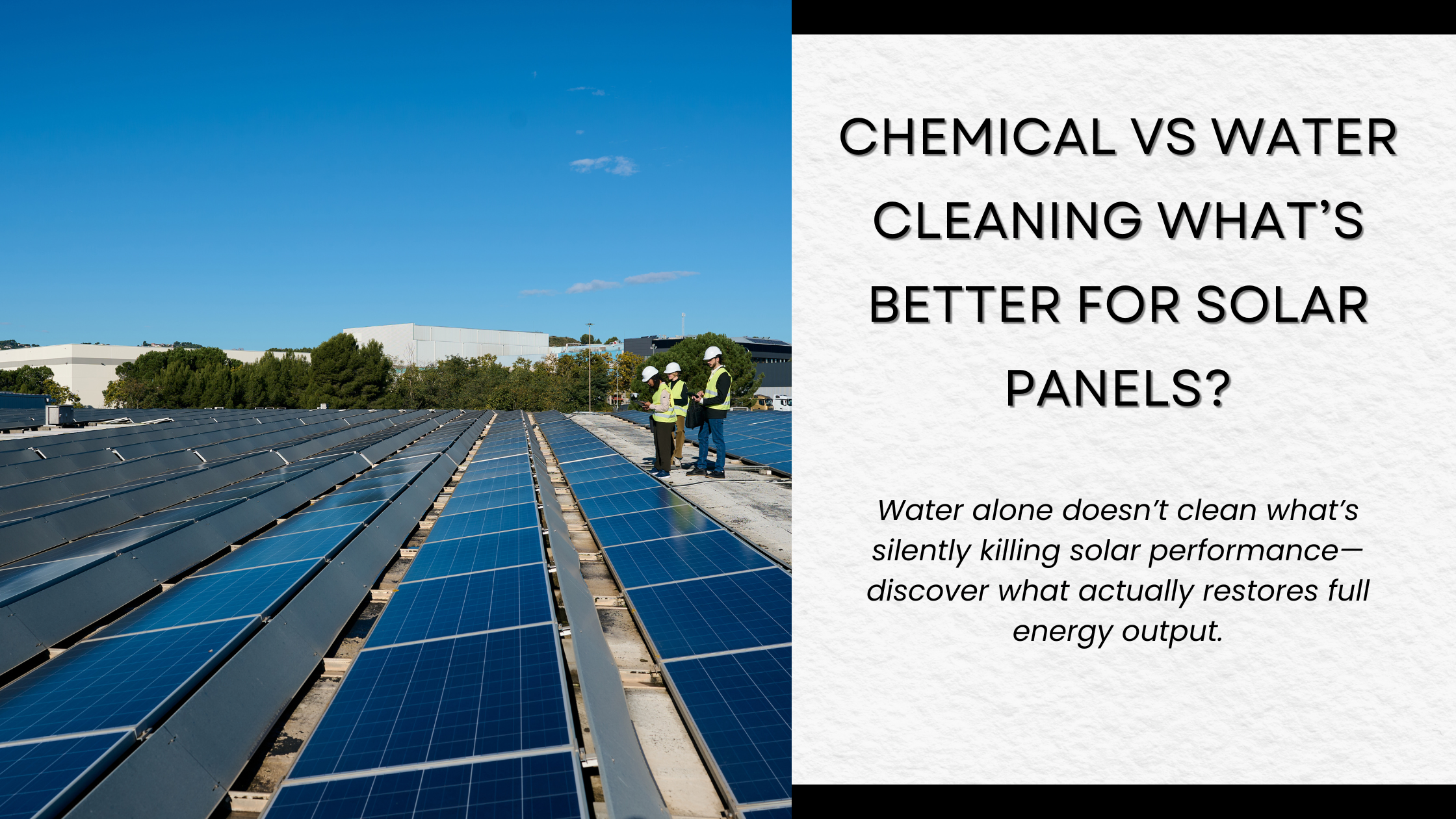
While water can remove loose dust, it lacks the cleaning strength needed for the tough grime that accumulates on solar panels over time. Factors like pollution, bird droppings, and industrial residue stick firmly to the surface, making simple rinsing ineffective and sometimes even harmful if done incorrectly.
Water helps with basic rinsing, but doesn’t provide deep cleaning.
- Leaves stains: Hard water dries with white mineral spots.
- Limited cleaning power: Cannot dissolve oils, droppings, or industrial soot.
- Risk of damage: Spraying cold water on hot panels can cause cracks (thermal shock).
That’s why experts recommend eco-friendly solar cleaning chemicals designed to remove dirt without leaving streaks or residue.
4. Why Specialized Chemicals Are Needed
As solar installations grow in size and complexity, the need for advanced cleaning solutions becomes more important than ever. General detergents or household cleaners can damage sensitive coatings, reduce panel efficiency, and even void warranties. Specialized solar cleaning chemicals are formulated to remove stubborn dirt safely while preserving the panel’s long-term performance.
Professional-grade solar panel cleaning liquids offer safe, effective cleaning for all panel types.
They are:
- Non-corrosive and pH-balanced for surface protection
- Biodegradable and environmentally safe
- Designed to remove tough grime like ash, droppings, and cement dust
- Formulated for streak-free clarity to ensure maximum sunlight absorption
Premium products like Solargent combine innovation and advanced formulation to deliver exceptional results for both residential and industrial solar systems.
5. Types of Solar Panel Cleaning Chemicals
Solar panels operate in different environments, which means their cleaning needs vary widely. Factors like dust levels, industrial pollution, and climate conditions influence the type of cleaning solution required. Whether it’s a small residential setup or a large solar farm, choosing the right chemical formula ensures safer cleaning, protects panel coatings, and delivers consistently higher energy output.
5.1 Eco-Friendly Cleaners
Ideal for homes and small commercial setups, these biodegradable cleaning liquids are gentle on panel surfaces and environmentally safe. They use minimal water, prevent scratches, and are suitable for areas where drainage flows into soil or garden landscapes.
5.2 Industrial-Grade Cleaners
Designed for solar farms and highly polluted environments, these advanced cleaners can remove heavy soot, flashover marks, cement dust, and industrial residue. Their powerful formulation ensures deep cleaning without damaging the panel’s protective coatings.
5.3 Anti-Static Cleaning Formulas
These specialized solutions reduce dust attraction after cleaning, helping panels stay cleaner for longer. They are particularly useful in dry, windy, or desert-like regions where dust accumulation happens quickly.
6. Key Benefits of Using the Right Cleaning Solution
Using a properly formulated solar panel cleaning solution goes beyond just improving appearance—it directly affects system performance and long-term reliability. These solutions are engineered to remove stubborn deposits safely, maintain panel clarity, and optimize sunlight capture, ensuring your solar setup operates at its highest potential.
- Boosts Power Output: Clean panels increase sunlight absorption, improving energy generation by 10–30%.
- Reduces Maintenance Costs: Stays cleaner longer, minimizing cleaning frequency.
- Protects Surface Coating: Prevents wear, scratches, and corrosion.
- Saves Water: Requires less rinsing compared to traditional cleaning.
- Improves Longevity: Maintains efficiency and extends the life of your solar investment.
Regular use of a professional solar panel cleaning chemical ensures spotless performance and lasting protection.
7. How to Use Solar Panel Cleaning Chemicals Properly
- Rinse panels gently with water to remove loose dust.
- Dilute the cleaning liquid as per the manufacturer’s instructions.
- Apply using a soft brush or microfiber cloth.
- Gently scrub to remove grime without scratching.
- Rinse thoroughly and allow panels to air-dry.
Avoid harsh tools or strong detergents—always choose a non-corrosive solar cleaning solution for best results.
8. Water Cleaning vs. Chemical Cleaning
| Aspect | Water Cleaning | Chemical Cleaning |
|---|---|---|
| Efficiency | Removes loose dust only | Removes stubborn grime, ash & droppings |
| Panel Health | Risk of stains & scratches | Safe for coatings & glass |
| Long-Term Cost | Requires frequent cleaning | Reduces cleaning frequency |
| Output | Moderate | 10–30% higher energy yield |
Using a solar panel washing liquid is clearly more effective, especially for large installations or dusty regions.
9. When to Use Chemicals Instead of Water
- In industrial or polluted areas
- During bird nesting seasons
- Near construction sites or highways
- On solar farms or large commercial roofs
- When panels show visible stains or flashover marks
In such conditions, plain water cleaning simply won’t be enough.
10. Expert Tips for Choosing the Best Solar Cleaning Chemical
- Look for neutral pH (6–8) to prevent corrosion.
- Ensure it’s biodegradable and non-abrasive.
- Choose anti-static or UV-resistant formulations.
- Verify compatibility with anti-reflective coatings.
11. Conclusion: The Smart Way to Keep Solar Panels Efficient
Using the right solar panel cleaning solution isn’t optional—it’s essential for maintaining performance, safety, and lifespan.
While water can help with quick rinsing, professional solar cleaning chemicals provide deeper cleaning, protect coatings, and improve overall efficiency.
Whether you manage a rooftop system or a large solar farm, the right chemical solution ensures your panels deliver consistent, reliable power for years.
⚡ Keep Your Solar Panels Shining the Smarter Way!
Choose advanced, eco-friendly solar cleaning solutions from Solargent to protect your panels, save water, and boost energy generation effortlessly.
📞 Call us now: +91 9179662322
📧 Email: soargnmh@gmail.com
🌐 Visit us for more: Solargent – Shine Brighter, Clean Smarter.
Frequently Asked Questions
FAQ 1: What is the best solution for solar panel cleaning?
Ans. The best solution for solar panel cleaning is a non-abrasive, pH-balanced chemical cleaner designed specifically for solar surfaces. These formulations safely remove bird droppings, cement dust, ash, and hard-water stains without damaging anti-reflective coatings, ensuring maximum efficiency and longer panel life.
FAQ 2: Why shouldn’t we use normal detergents to clean solar panels?
Ans. Regular detergents contain harsh chemicals that can scratch or corrode the delicate coating on solar panels. This reduces sunlight absorption and permanently lowers energy output. Using a specialised solar panel cleaning chemical prevents micro-scratches, streaks, and coating damage.
FAQ 3: How often should solar panels be cleaned with chemicals?
Ans. The cleaning frequency depends on environmental exposure. In dusty regions, industrial zones, or bird-dense areas, panels may require chemical cleaning every 1–2 months. Residential rooftop systems in cleaner areas may only need it every 3–6 months. Chemical cleaning ensures deeper removal of stubborn grime when water alone fails.
FAQ 4: Do solar cleaning chemicals increase energy production?
Ans. Yes. A high-quality solar panel cleaning solution improves clarity and light absorption, increasing energy generation by 10–30% depending on dirt levels. Clean panels operate more efficiently, reducing energy losses caused by the buildup of ash, stains, and pollutants.
FAQ 5: Are solar panel cleaning chemicals safe for the environment?
Ans. Eco-friendly solar panel cleaners are biodegradable, non-toxic, and safe for soil and drainage systems. They provide effective cleaning without harming the environment, making them ideal for homes, commercial rooftops, and large solar farms seeking sustainable maintenance solutions.