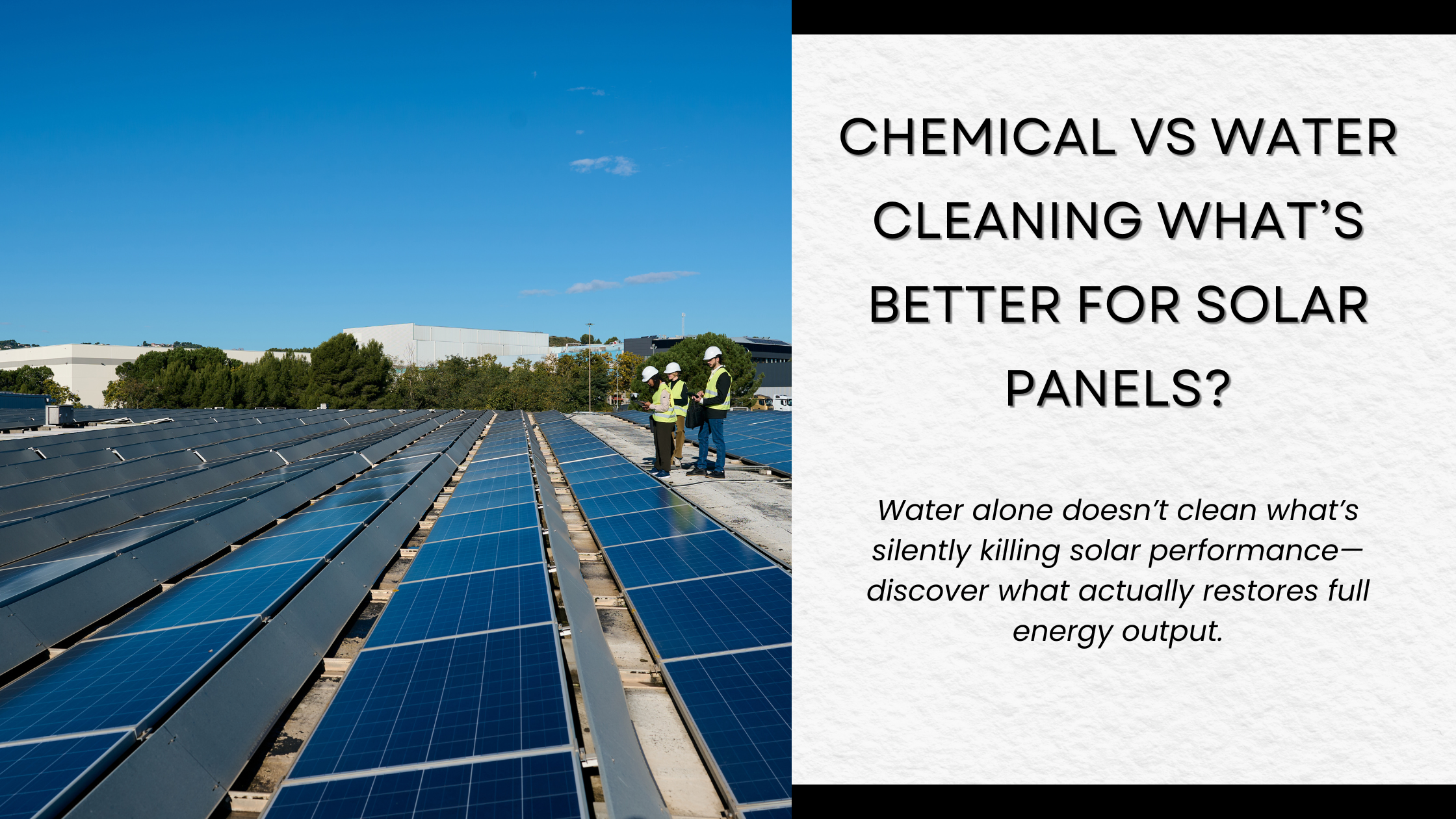
Why Solar Panel Cleaning Directly Impacts Performance
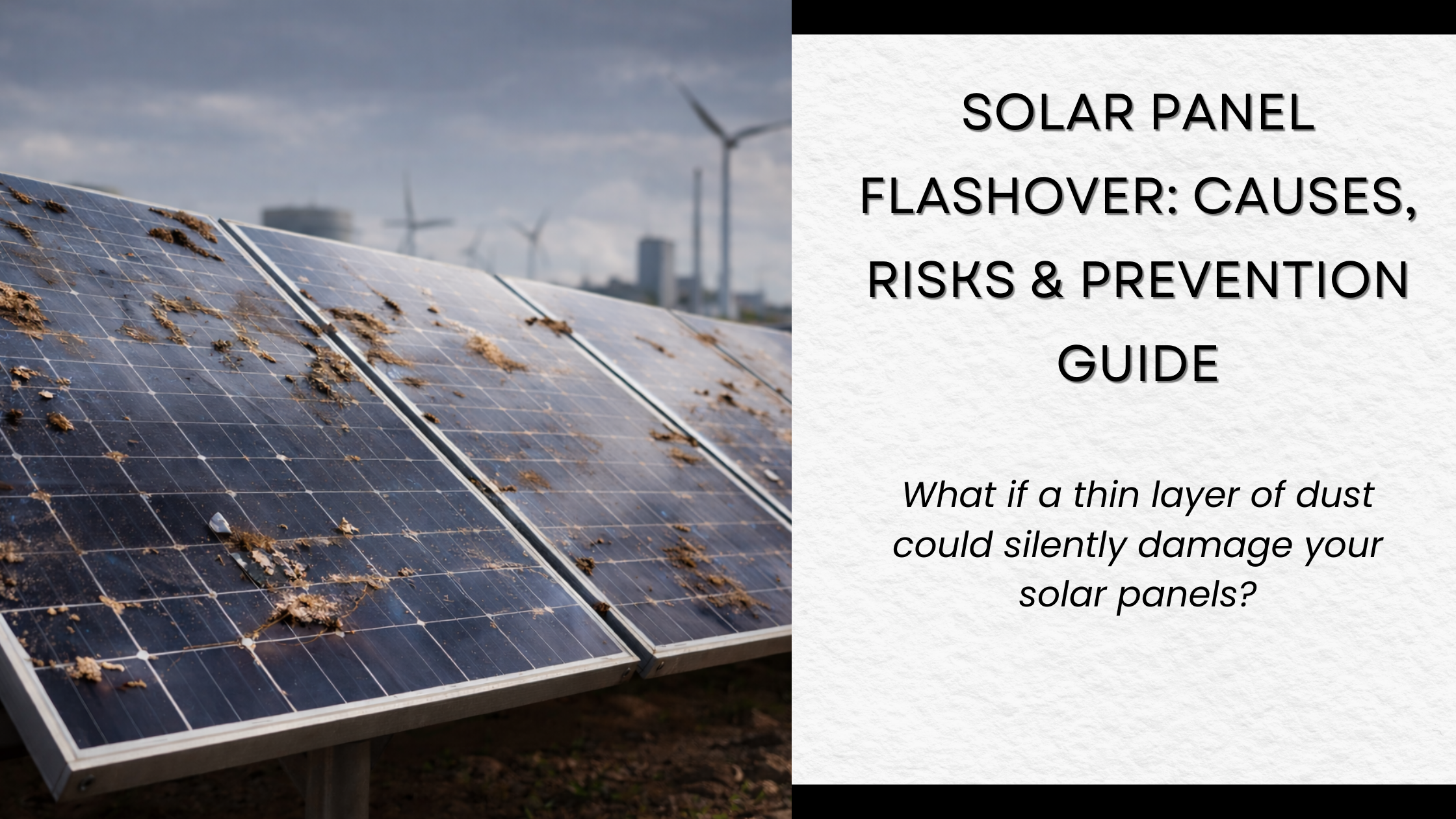
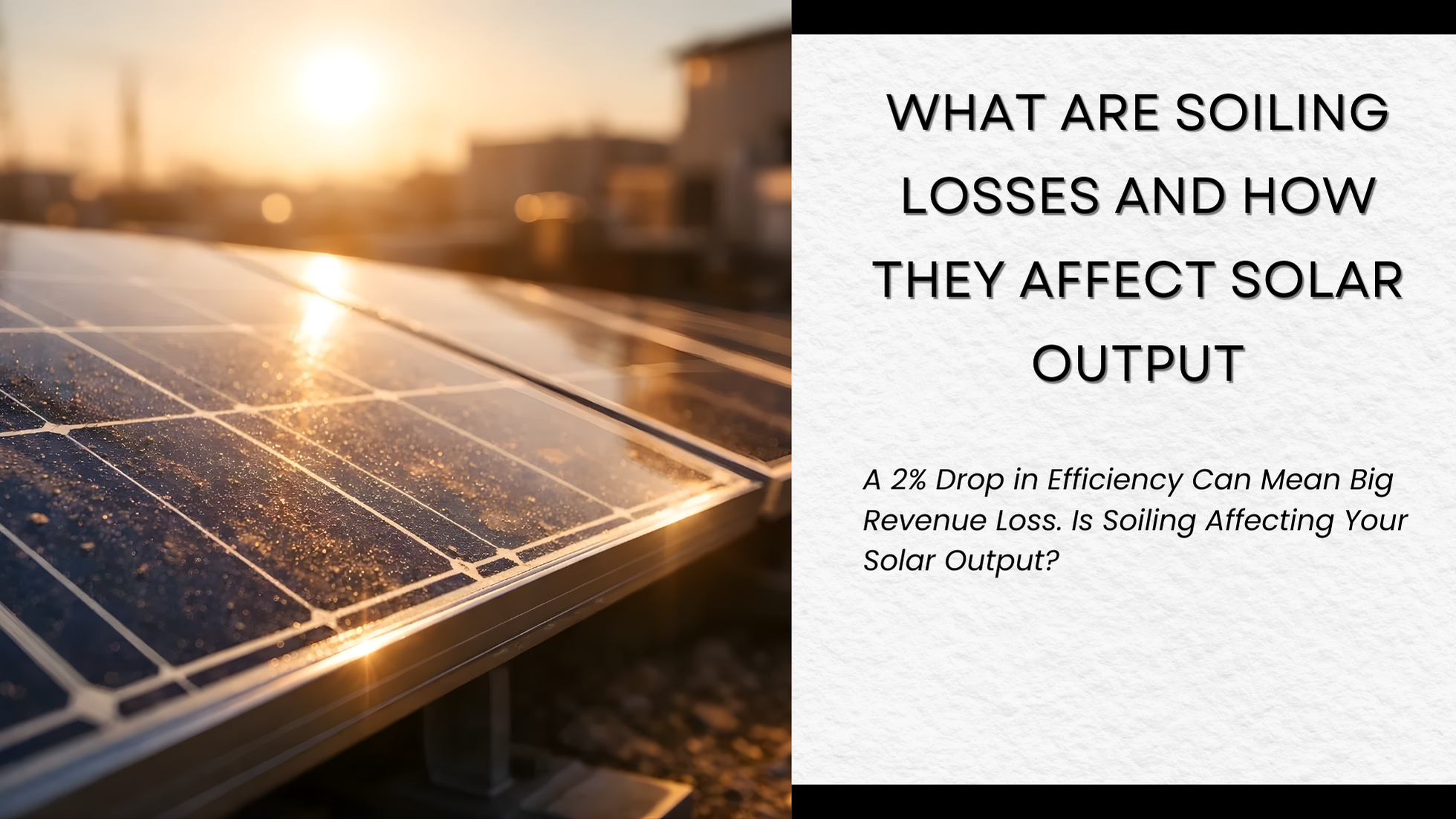
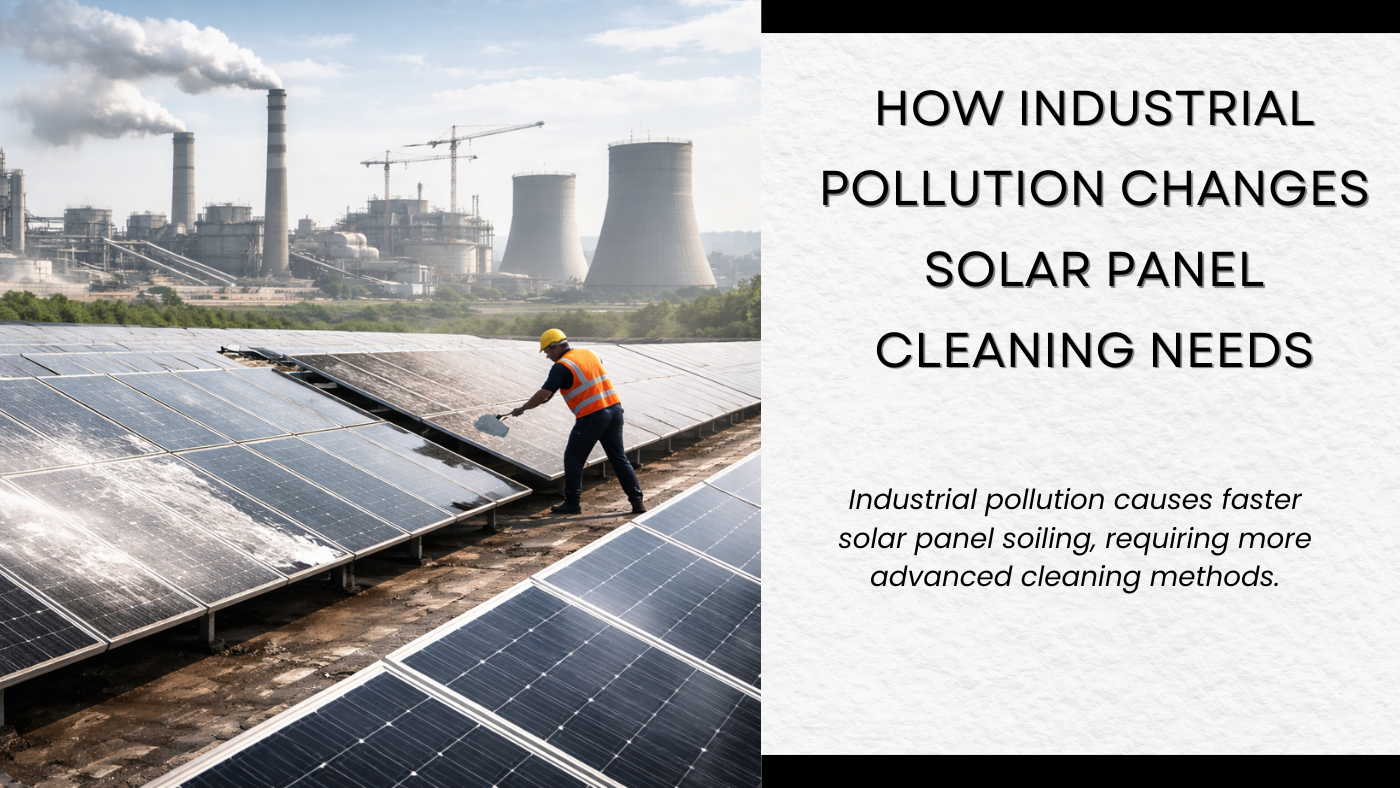
Solar panels are built to generate maximum electricity when sunlight reaches the photovoltaic cells without obstruction. However, environmental factors such as dust, air pollution, bird droppings, pollen, industrial residue, and oily contaminants gradually accumulate on the panel surface. This buildup forms a barrier that reduces light absorption and directly affects power generation.
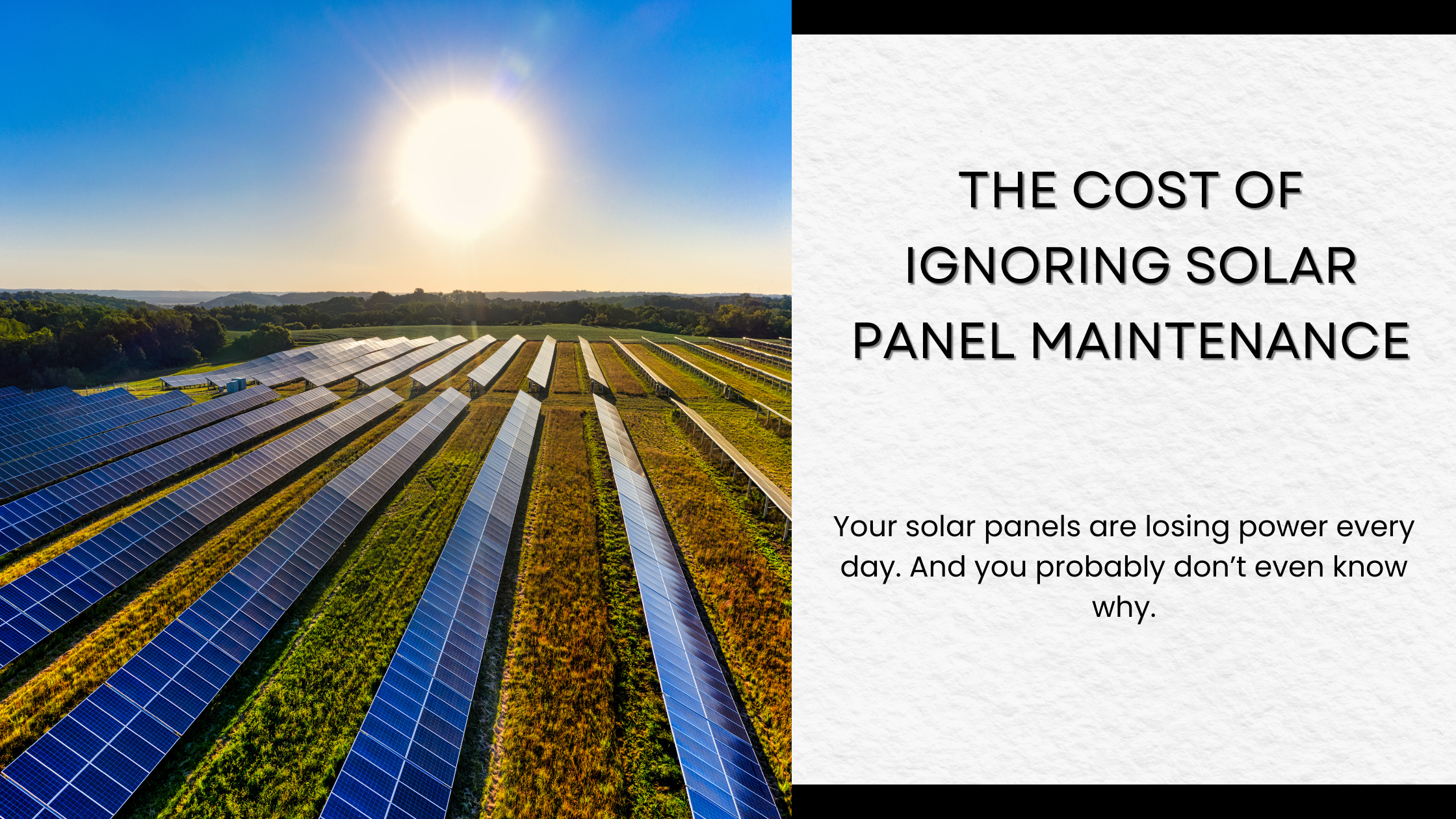
Even a thin layer of dirt can cause a measurable drop in solar panel efficiency. In real-world conditions, unclean panels may experience 10% to 30% energy loss, depending on location and exposure. In high-dust or industrial zones, efficiency losses can be even higher if panels are not cleaned using the right method. This makes solar panel cleaning a critical component of long-term solar panel maintenance and system performance.
Understanding Solar Panel Cleaning Methods
Solar panel cleaning generally follows two main approaches:
Normal water-based cleaning
Solar panel–specific chemical-based cleaning
While both aim to remove dirt from the panel surface, they differ significantly in cleaning depth, residue removal, impact on efficiency, and how long panels remain clean after maintenance. Choosing the right cleaning method plays a key role in protecting panel surfaces and maximizing long-term energy output.
What Is Water-Based Cleaning for Solar Panels?
Water-based cleaning involves using plain or demineralized water to rinse away loose dust and surface-level dirt from solar panels. This method is commonly performed using soft brushes, microfiber tools, low-pressure water systems, or automated spray setups. It is typically used as a routine or preventive cleaning method.
Water cleaning works best when contamination is light and dry, such as in residential areas with low pollution or regions that receive regular rainfall. However, in environments exposed to pollution or sticky deposits, water alone may not fully remove surface films. As a result, repeated water cleaning is often required to maintain acceptable performance levels.
What Is Chemical-Based Cleaning for Solar Panels?
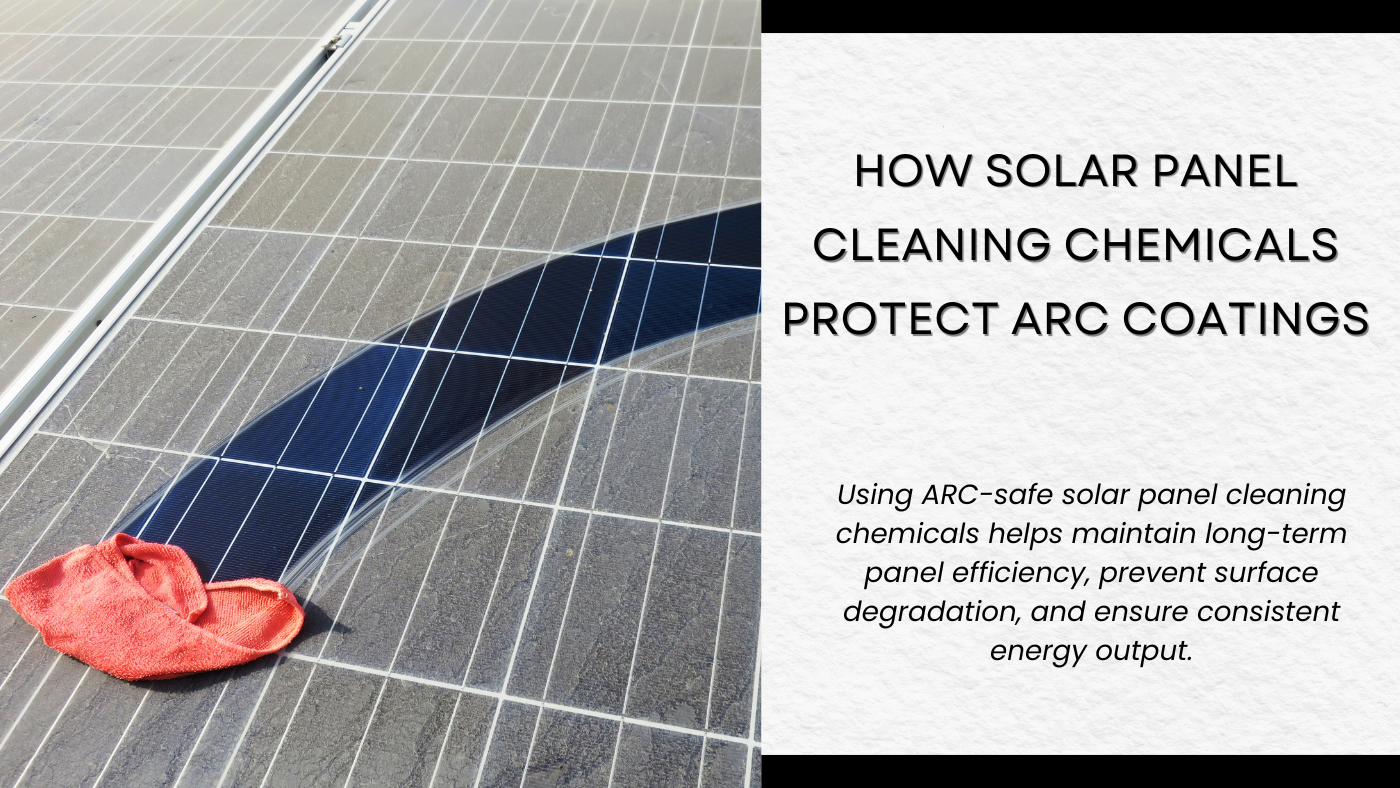
Chemical-based cleaning uses a solar panel cleaning solution formulated to remove stubborn contaminants that normal water cannot eliminate. These cleaning solutions are designed to be ARC-safe, non-corrosive, and compatible with photovoltaic glass when used with proper dilution and rinsing techniques.
Chemical cleaning breaks down grease, soot, bird droppings, and industrial residue, allowing panels to return to a cleaner, residue-free state. This deeper cleaning process supports more consistent solar panel efficiency and reduces the frequency of maintenance cycles, especially in demanding environmental conditions.
Chemical vs Water Cleaning: Key Differences
Cleaning Capability
Water-based cleaning is effective for removing loose and visible dust from solar panels. Chemical-based cleaning goes deeper, eliminating grime, oily residue, and stubborn pollutants that water alone cannot remove.
Efficiency Recovery
Panels cleaned with water typically see only limited efficiency improvement. In contrast, chemical-based cleaning delivers significant efficiency restoration by removing residue that blocks sunlight.
Cleaning Frequency
Water cleaning usually needs to be performed more frequently, especially in dusty or polluted environments. Chemical cleaning keeps panels cleaner for longer, reducing the overall cleaning cycle.
Surface Cleanliness Duration
Water-based cleaning offers short-term cleanliness, as mineral traces and surface films can remain. Chemical cleaning provides long-lasting cleanliness by leaving panels residue-free when properly rinsed.
Residue Risk
There is a higher risk of mineral buildup and streaks with water cleaning. Chemical-based cleaning, when done correctly, leaves no residue and helps prevent faster re-soiling.
Impact of Cleaning Methods on Solar Panel Efficiency
Residue buildup on solar panels reduces light transmission, directly limiting energy generation. While water cleaning may offer temporary improvement, leftover films can continue blocking sunlight and lead to faster re-soiling.
Chemical-based solar panel cleaning removes contaminants at a molecular level, restoring optimal light absorption. Clean, residue-free surfaces allow panels to operate closer to their rated capacity, ensuring stable performance and higher lifetime energy yields.
Risks of Relying Only on Water Cleaning
Using only water for solar panel cleaning can lead to:
Incomplete removal of pollutants
Mineral stains and streak formation
Faster dirt accumulation after cleaning
Uneven cleanliness that may contribute to localized hotspots
Over time, these issues increase maintenance frequency and reduce overall system efficiency.
When Chemical Cleaning Becomes Essential
Chemical-based solar panel cleaning is particularly necessary in:
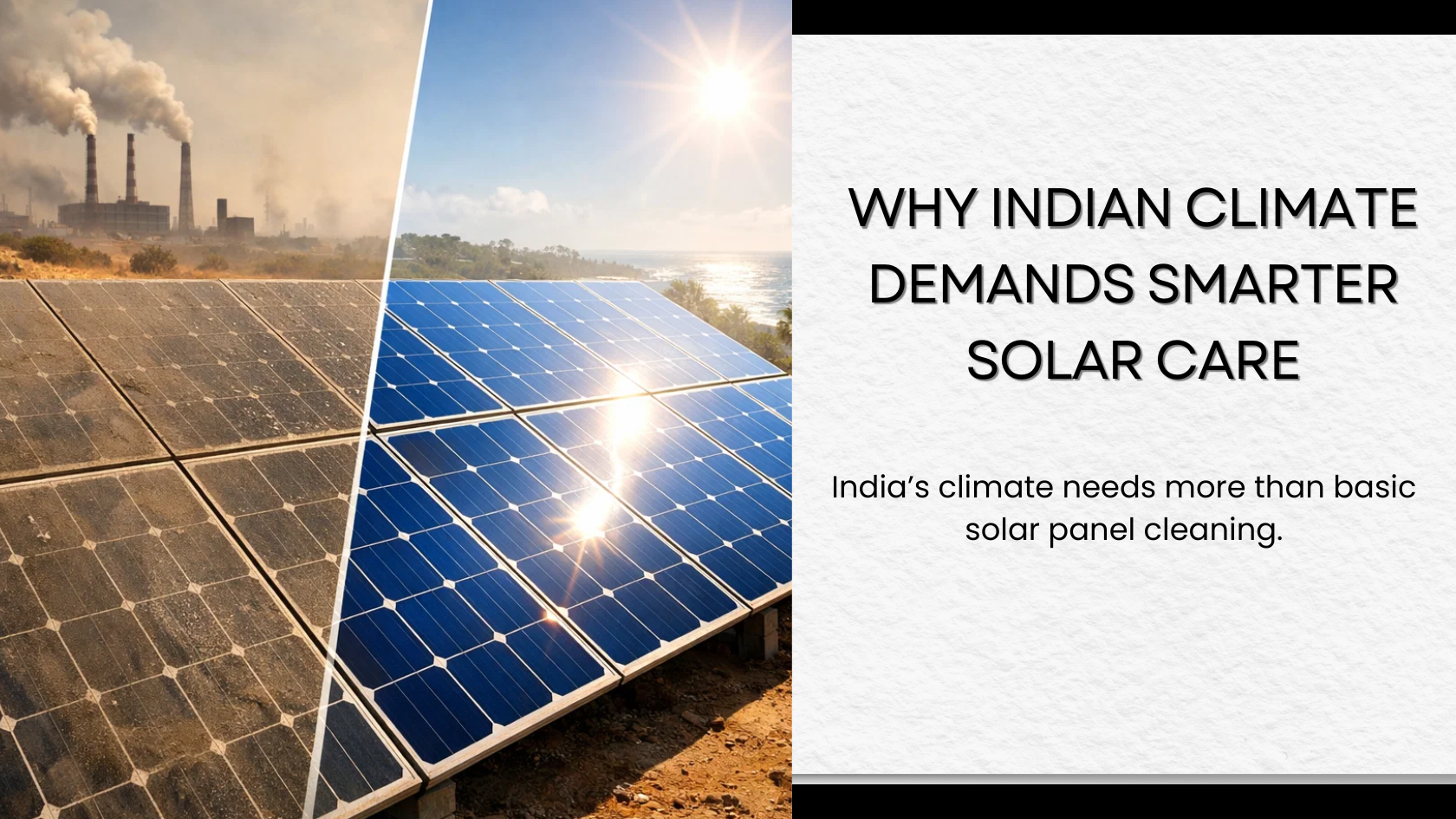
Industrial and high-pollution zones
Solar farms and utility-scale installations
Areas affected by cement dust, exhaust emissions, or heavy bird activity
In such conditions, professional solar panel cleaning using appropriate chemicals helps prevent long-term efficiency loss and surface degradation.
Eco-Friendly Chemical Cleaning and Sustainability
Modern solar panel cleaning chemicals are designed with sustainability in mind. Many formulations are biodegradable, non-toxic, and water-efficient, reducing environmental impact while maintaining cleaning effectiveness.
By minimizing repeated rinsing and extending cleaning intervals, eco-friendly chemical cleaning supports both environmental responsibility and operational efficiency.
Choosing the Right Solar Panel Cleaning Approach
The ideal solar panel cleaning method depends on:
Environmental exposure and pollution levels
Type and intensity of contamination
System size and installation location
Access, safety, and maintenance frequency
Residential systems in cleaner environments may manage with periodic water cleaning, while commercial and industrial solar installations typically benefit from chemical-based cleaning solutions and professional expertise.
Conclusion: Why Solar Panel Cleaning Chemicals Are the Better Long-Term Choice
Maintaining clean solar panels is essential for achieving consistent energy output and protecting the long-term value of a solar installation. While normal water cleaning can help remove loose and visible dust, it often proves insufficient in real-world environments where panels are exposed to air pollution, oily deposits, bird droppings, and industrial contaminants. In such conditions, water alone may leave behind mineral residues or thin surface films that continue to block sunlight and accelerate re-soiling.
Solar panel cleaning chemicals are specifically developed to address these challenges. Unlike water-based cleaning, they are designed to break down stubborn pollutants at the surface level and leave panels clean and residue-free when used correctly. This deeper cleaning helps restore optimal solar panel efficiency, improves overall energy generation, and reduces the need for frequent maintenance cycles.
For residential, commercial, and industrial solar system owners, adopting the right cleaning approach plays a critical role in long-term performance and cost efficiency. Choosing professional-grade solar panel cleaning chemicals ensures better light absorption, more stable power output, and extended panel lifespan—making it a more effective and reliable solution for long-term solar maintenance.
Take the Next Step Toward Better Solar Performance
If you are looking for deeper, longer-lasting solar panel cleaning results, Solargent offers an eco-friendly solar panel cleaning solution engineered for safe, effective, and residue-free cleaning. Designed for modern solar systems, Solargent’s solutions help maximize energy efficiency while protecting sensitive panel surfaces and supporting environmentally responsible maintenance practices.
Don’t let dirt reduce your solar output—choose Solargent for cleaner panels, higher performance, and a sustainable maintenance advantage.
Frequently Asked Questions
1. Why is solar panel cleaning important for performance?
Solar panel cleaning is important because dust, pollution, and residue block sunlight from reaching photovoltaic cells, reducing energy generation and overall system efficiency.
2. How often should solar panels be cleaned?
Cleaning frequency depends on location and environmental conditions. Panels in low-dust areas may need cleaning every few months, while polluted or industrial areas require more frequent cleaning.
3. Does dirt really reduce solar panel efficiency?
Yes. Even a thin layer of dust or residue can reduce solar panel efficiency by limiting light absorption, leading to noticeable power output losses over time.
4. Which is better: chemical vs water cleaning for solar panels?
Water cleaning is suitable for light dust, but chemical cleaning is more effective for removing stubborn pollutants, oily residue, and bird droppings, especially in high-pollution environments.
5. Is chemical cleaning safe for solar panels?
Yes, when solar panel–specific, ARC-safe cleaning chemicals are used with proper dilution and rinsing, chemical cleaning is safe and helps maintain panel surface integrity.
6. Should I use professional solar panel cleaning solutions instead of water?
Professional solar panel cleaning solutions provide deeper, longer-lasting cleaning than water alone, helping improve efficiency, reduce maintenance frequency, and protect long-term performance.