Solar Panel Maintenance · India
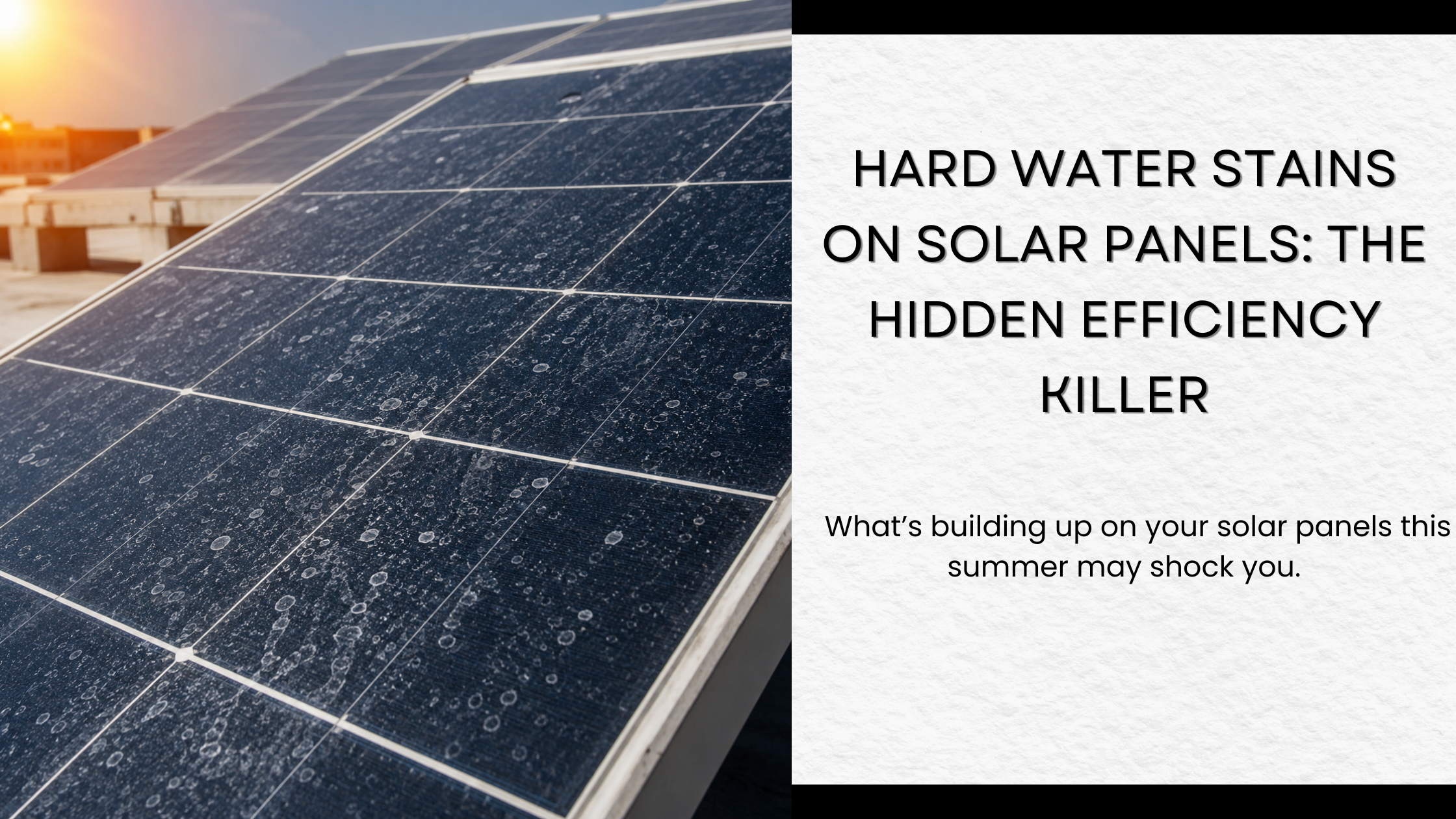
Hard Water Stains on Solar Panels: The Hidden Efficiency Killer
Dust gets noticed. Hard water stains don’t — and that’s exactly what makes them dangerous. Those white spots aren’t cosmetic. They’re silently stealing your solar ROI every single day.
Those white spots, cloudy patches, and faint streaks on your panels aren’t just cosmetic. They’re blocking sunlight, stealing energy, and slowly degrading the very coating that makes your panels efficient. In India, where groundwater across most major states carries extremely high mineral content, hard water staining is one of the leading — and most ignored — causes of solar output decline.
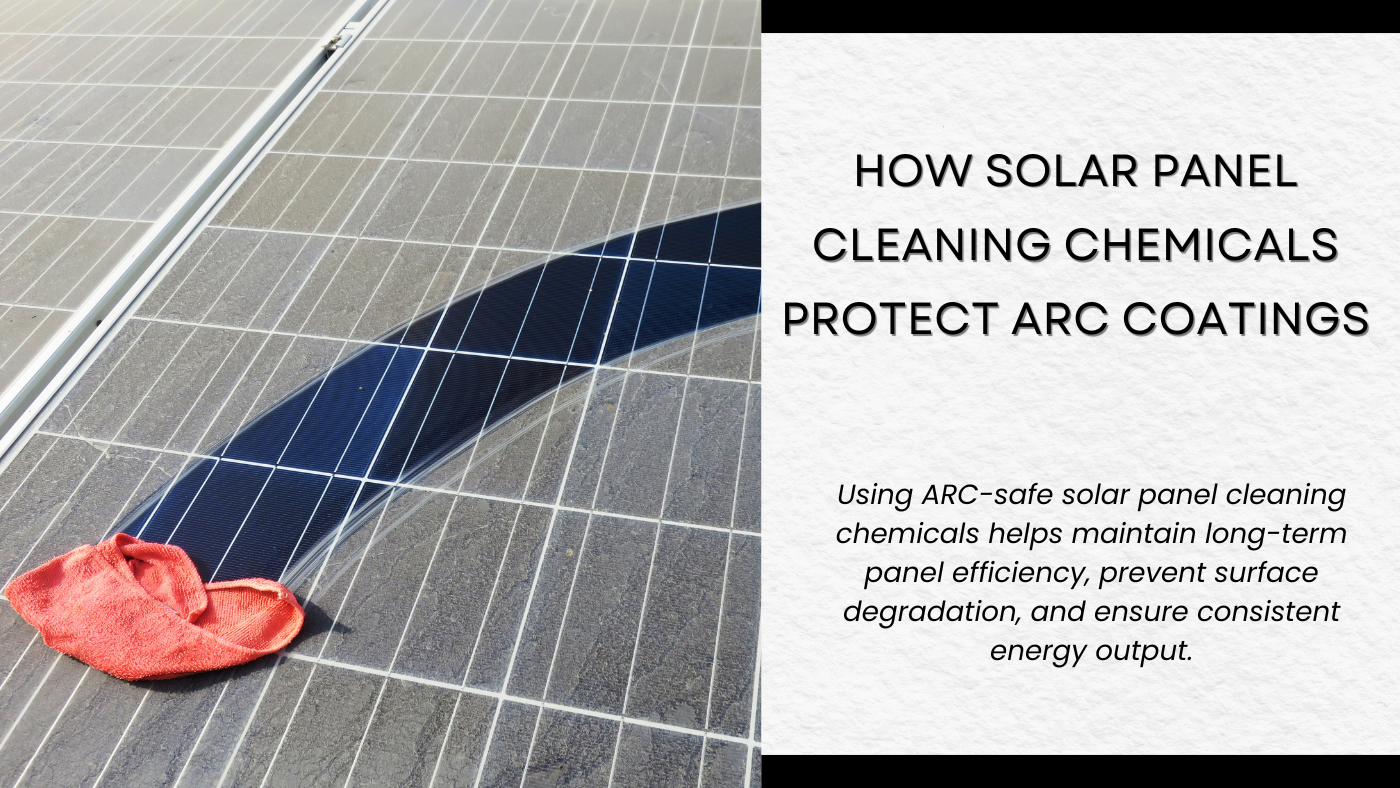
Here’s what most people get wrong: switching to RO water alone isn’t enough. Once mineral deposits have bonded to a hot panel surface, you need a professional solar panel cleaning chemical specifically formulated to dissolve them safely — without damaging the module-friendly protective layer that your panels depend on.
What Are Hard Water Stains — And Why Are They So Damaging?
Hard water contains dissolved calcium, magnesium, silica, and various salts. When this water dries on a panel surface, the minerals don’t evaporate — they stay behind, bonding to the glass and building up with every passing cleaning cycle.
🪨
Mineral Scaling
A rough, crusty layer accumulates on the glass surface with every cleaning cycle
🌫️
Reduced Light Transmission
Deposits scatter and block sunlight before it ever reaches PV cells
🔬
Surface Micro-Etching
Silica chemically etches into the glass at a microscopic level — this is irreversible
🛡️
Module-Friendly Surface Degradation
Harsh mineral residue and wrong cleaning methods erode the coating responsible for maximum light absorption
📉
Long-Term Efficiency Loss
What starts at 2–3% can compound to 10–15% or more if left untreated — and the worst part, using the wrong cleaning products makes all of this significantly worse
How Hard Water Stains Kill Solar Efficiency
Reduced Light Absorption
Calcium and magnesium deposits form a semi-opaque mineral film on panel glass. This film scatters incoming light instead of letting it pass cleanly to the PV cells — causing direct, measurable energy loss even on perfectly sunny days. Plain water rinsing cannot fix this. Only a solar panel cleaning chemical with descaling properties can dissolve and lift these deposits.
Hotspot Formation
Uneven mineral buildup creates uneven light absorption across the panel. Some sections receive less light, generate less current, and overheat — creating localised hotspots that permanently damage individual cells and reduce overall panel lifespan.
The Costliest Consequence
Module-Friendly Surface Damage
The module-friendly protective layer is engineered to maximise light absorption. It’s also highly sensitive. Hard water deposits are damaging on their own, but the damage increases significantly when people try to remove them using unsuitable cleaning products:
⚠️ Alkaline detergents — chemically attack the ARC layer
⚠️ Abrasive scrubbing — physically scratches the coating
⚠️ Acid descalers — cause irreversible surface etching
⚠️ Tap water rinse — redeposits fresh minerals every cycle
Once module-friendly is damaged, that efficiency loss is permanent. No cleaning can restore it. A professional solar panel cleaning chemical — pH-balanced and ARC-safe — is not optional. There is no safe alternative.
Why Hard Water Is Such a Severe Problem in India
India’s groundwater conditions make hard water staining almost unavoidable without the right maintenance protocol. The worst-affected regions:
Extremely high mineral content; rapid scaling accelerated by intense summer heat
High calcium & magnesium concentration; industrial pollution adds complexity
Hard water combined with heavy industrial and vehicular pollution
Mixed groundwater quality; coastal areas face additional salt deposition
Significant hard water zones across agricultural and urban areas — often underestimated
🔍
Signs Your Panels Already Have Hard Water Damage
Don’t wait for a dramatic output drop. Watch for these warning signals:
◉White spots or cloudy patches on panel glass
◉Streaky marks that persist even after water cleaning
◉A dull, hazy appearance where panels used to look clear
◉Gradual, unexplained reduction in daily energy generation
◉Uneven output across strings in your monitoring system
If you’re seeing any of these, water alone won’t fix it. A professional solar panel cleaning chemical designed for mineral deposit removal is the only correct solution.
The Right Way to Remove Hard Water Stains
Follow all five steps — skipping any one of them delivers incomplete results.
1
Use the Right Professional Cleaning Chemical
Choose a chemical that is pH-balanced for PV glass, contains descaling agents for calcium and magnesium, leaves zero residue, and is safe for frames, seals, and junction boxes.
🚫 Do not use vinegar, household descalers, or generic industrial cleaners — they are not safe for module-friendly protective surfaces.
2
Always Use Low-TDS or RO-Treated Water
Your cleaning chemical dissolves deposits. RO water ensures no fresh minerals are redeposited during rinsing. Both are essential — neither works properly without the other.
3
Clean at the Right Time
Never clean during midday heat. Hot glass causes instant evaporation, leaving concentrated mineral residue and risking thermal shock micro-cracks.
🌅Clean early morning or late evening — when panels are cool, and the chemical has time to work
4
Use Soft, Non-Abrasive Tools
Hard bristles, rough cloths, and high-pressure jets can physically damage the module-friendly protective layer. Use soft microfibre tools and let the cleaning chemical do the heavy lifting.
5
Maintain a Consistent Schedule
In hard water regions, clean every 15–30 days — more frequently in peak summer and after dust storms. Consistent maintenance prevents deposits from hardening into scale that causes permanent damage.
Why Household Detergents Are the Wrong Choice
Soap and detergent are not a cost-saving substitute — they’re actively damaging your panels:
❌
Alkaline detergents degrade the module-friendly protective layer through chemical reactions.
❌
Abrasive powder cleaners micro-scratch the glass surface
❌
Soap-based cleaners leave surfactant residue — an adhesive layer for future dust
❌
Household acid descalers cause glass etching and irreversible ARC damage
The cost difference between a professional solar panel cleaning chemical and household soap is negligible. The cost difference in panel performance and lifespan is enormous.
Conclusion
Hard water stains are not just a cosmetic issue. They are a direct threat to panel efficiency, module-friendly surface integrity, and your solar ROI. In India, the question isn’t whether your panels will face hard water damage — it’s whether you’ll address it correctly.
🧪
Professional Chemical
pH-balanced, ARC-safe, with active descaling agents
💧
Low-TDS / RO Water
Prevents fresh mineral deposits during every rinse
📅
Consistent Schedule
Every 15–30 days, before deposits harden and etch
💧
Protect Your Panels the Right Way
Solargent manufactures professional-grade solar panel cleaning chemicals — pH-balanced, ARC-safe, descaling-certified, and engineered for India’s hard water conditions and extreme summer heat.
Contact Solargent Today →
Frequently Asked Questions
Q1
Can hard water stains permanently damage solar panels?
Yes — and the damage is irreversible. Repeated exposure causes mineral scaling, surface micro-etching, and module-friendly surface degradation that no cleaning can undo. Catching and treating deposits early with a professional cleaning chemical is the only way to prevent permanent efficiency loss.
Q2
Is RO water alone enough to prevent hard water stains?
No — RO water prevents new deposits but cannot remove existing ones. A professional solar panel cleaning chemical is required to dissolve and lift minerals already bonded to the surface. Always use both together.
Q3
Why do panels in Rajasthan and Gujarat stain so quickly?
Groundwater there has some of India’s highest mineral concentrations. In summer heat, water evaporates within seconds of contact, leaving calcium, magnesium, and silica deposits almost instantly. A descaling-grade cleaning chemical is non-negotiable in these regions.
Q4
Can I use vinegar or a household descaler instead?
No — these are too harsh and unbalanced for solar panel surfaces. They can damage the module-friendly protective layer and permanently etch the glass. Only use a pH-balanced, solar-specific professional cleaning chemical.
Q5
How Do I Know if My Panels Already Have Module-Friendly Surface Damage?
Look for persistent cloudiness, dull appearance, or output that doesn’t recover even after cleaning. If a thorough clean with the right chemical still doesn’t restore brightness, coating damage may have already occurred — and a professional inspection is recommended.