How to Protect Solar Panels During Peak Summer in India

protect solar panels during peak summer in India
Solar Maintenance Guide · India

Summer Solar Protection Guide

Indian summers silently drain your solar investment — heat, dust, hard water, and pollution work together every single day. Here’s how to fight back the right way.

Indian summers are brutal — not just for people, but for solar panels too. Scorching temperatures, relentless dust storms, hard water deposits, and industrial pollution quietly drain your system’s efficiency day after day.

If you own a solar installation — residential or commercial — summer is the season that demands the most attention. And the single most overlooked part of that maintenance? Using the right solar panel cleaning chemical. Not soap. Not detergent. Not tap water. A professional-grade solution built specifically for photovoltaic (PV) surfaces.

☀️

Does Extreme Heat Hurt Solar Panel Efficiency?

Yes — and it surprises most people. Solar panels are most efficient at moderate temperatures. As surface temperatures climb beyond the rated operating point, voltage output drops and energy conversion efficiency falls. During Indian summers, panel surfaces can reach temperatures far beyond ambient air — causing measurable output loss every single day. Add dust, bird droppings, and pollution baking onto those hot surfaces, and you’ve got a compounding problem that gets worse the longer you ignore it.

Why Summer Dust in India Is a Bigger Problem Than You Think

Indian summers bring a uniquely aggressive combination of soiling agents that standard cleaning can’t handle:

🌬️
Fine Sand Winds
Dry high-speed winds loaded with fine sand particles that coat every surface
🏗️
Construction Dust
Industrial and construction particulates that settle and bond under heat
🐦
Bird Droppings
Harden rapidly in heat, creating stubborn acidic deposits that etch glass
🏭
Oily Particulates
Industrial oily films that bond permanently to hot glass surfaces

Hardest Hit Regions

6 Ways to Protect Your Solar Panels This Summer

Follow these six practices consistently — your panels and your ROI will thank you.

1

Use a Professional Solar Panel Cleaning Chemical — Every Time

⚠️ This is non-negotiable — household cleaners silently degrade your AR coating

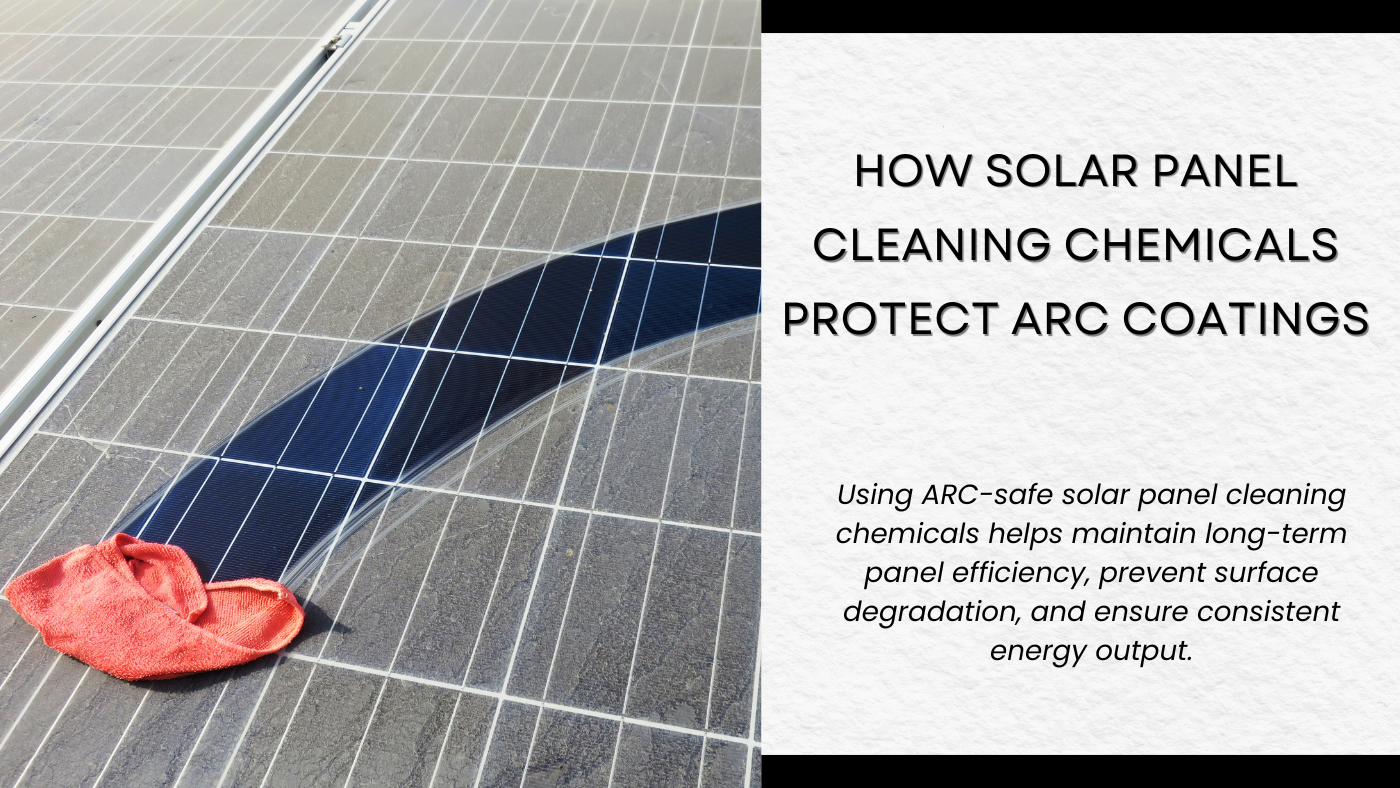
Solar panels have a delicate module-friendly protective layer that maximises light absorption. Household cleaners and detergents contain alkaline compounds, abrasive particles, and surfactants that degrade this surface over time — silently reducing output and potentially voiding your manufacturer’s warranty.

A professional solar panel cleaning chemical is:

pH-balanced & AR coating safe
Lifts dust, droppings & pollution
Rinses streak & deposit-free
Safe for frames, seals & junction boxes

2

Clean Every 15–30 Days During Summer

In dusty regions, panels should be cleaned every 15–30 days during summer. After a dust storm, clean immediately — don’t wait for the scheduled date.

🔆
Maximum sunlight reaches PV cells at all times
🛡️
Dust never has time to harden and bond
📈
Energy generation stays stable and predictable

3

Never Clean During Midday Heat

Cleaning hot panels mid-afternoon causes three serious problems:

💥
Thermal Shock
Cold water on scalding glass creates micro-cracks
💨
Instant Evaporation
Water dries before cleaning, leaving mineral rings
🧪
Reduced Effectiveness
Chemicals work best at moderate temperatures
🌅
Best Time to Clean
Early morning or late evening — when panels are cool and chemical solutions perform optimally

4

Always Use Low-TDS or RO-Treated Water

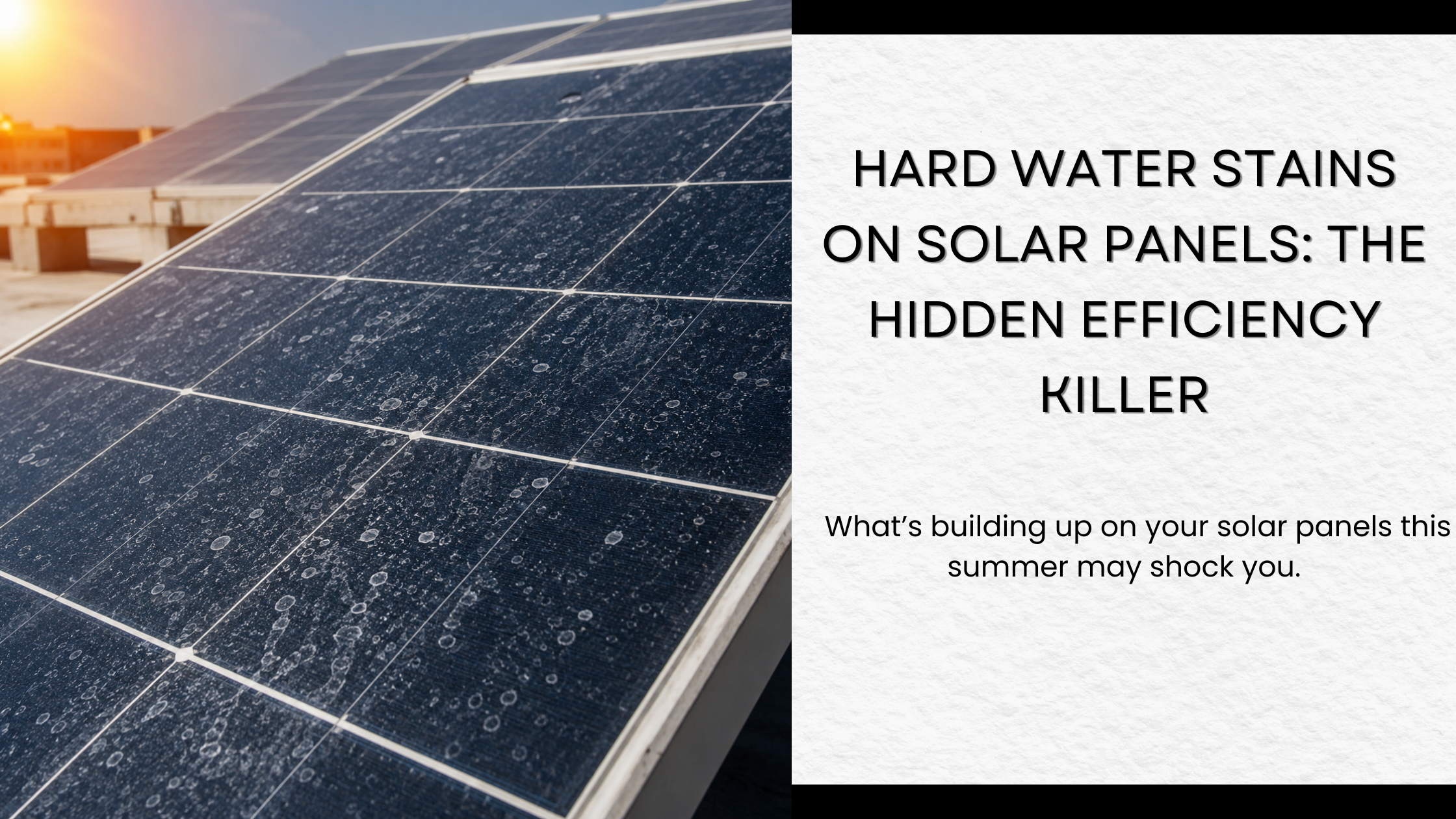
Hard water is widespread across India. Used on hot panels, it leaves behind white calcium and magnesium scaling that reduces transmittance and bonds stubbornly to glass.

Always pair your professional cleaning chemical with RO-treated or low-TDS water.

The chemical handles dirt — low-TDS water ensures no new mineral deposits form during rinsing. One without the other delivers suboptimal results.

5

Use Anti-Flashover Solutions for Commercial Plants

For live solar panels and large-scale installations, electrical safety during cleaning is critical. Anti-flashover solar cleaning chemicals are formulated with low electrical conductivity — making them safe for use on energised panels and significantly reducing the risk of electrical flashover, short circuits, and personnel hazards.

Standard cleaning liquids are not designed with electrical safety in mind. For any professional solar cleaning operation, an anti-flashover solution isn’t optional — it’s the responsible choice.

6

Monitor Output and Inspect for Hotspots

A drop in energy generation is often the first sign that panels need cleaning. Dirt accumulation combined with extreme heat can also create hotspot conditions — localised overheating that causes permanent cell damage, reduces panel lifespan, and in severe cases creates fire risks.

🔥 Cleaning on schedule with the right chemical is your first line of defence against hotspots.

Common Mistakes That Kill Solar Performance

Using household soap or detergent damages AR coating, leaving sticky residue
Using tap water with high TDS creates mineral scaling and white deposits
Cleaning during midday  thermal shock, instant evaporation, and mineral water spots
Skipping summer cleaning cycles, dust compounds; recovery can take weeks
High-pressure jets without pre-treatment  pressure alone can’t remove bonded residue

Commercial & Utility-Scale

Why This Matters Even More for Commercial Plants

For utility-scale and commercial rooftop solar, the financial stakes are high. Ignoring proper maintenance protocol isn’t just an efficiency issue — it’s a financial liability.

📉
A 10% efficiency loss on 1 MW over 300 days is significant revenue — gone
📜
Incorrect cleaning chemicals may void the manufacturer’s warranty coverage
🔧
Hotspots and faults from poor maintenance trigger costly equipment failures

Conclusion

Protecting your solar panels during India’s peak summer isn’t just about cleanliness — it’s about protecting a capital investment and maximising ROI year after year. The fix is a disciplined routine built around three non-negotiable pillars:

🧪
Professional Chemical
pH-balanced, AR coating safe, effective against all soil types
💧
Low-TDS / RO Water
No new mineral deposits during rinsing
📅
Consistent Schedule
Every 15–30 days in summer, adjusted for local conditions

Ready to Clean Smarter?

Solargent offers professional-grade solar panel cleaning chemicals — pH-balanced, AR coating safe, anti-flashover certified, and engineered specifically for India’s harsh summer conditions.
Contact Solargent Today →

Frequently Asked Questions

Q1
Does heat actually reduce solar panel output?
Yes — higher temperatures lower voltage. Panel surfaces in Indian summers can reach extreme temperatures, causing measurable efficiency drops daily. More heat ≠ , more power.
Q2
How often should I clean solar panels during summer?
Every 15–30 days minimum. In dusty regions like Rajasthan, Gujarat, or Delhi NCR, clean immediately after any dust storm — don’t wait for the scheduled date.
Q3
Can I use regular soap or detergent to clean panels?
No,It damages the module-friendly protective layer. Household cleaners are alkaline, leave sticky residue, and silently degrade the surface that helps your panels maintain maximum efficiency. Always use a pH-balanced solar-specific chemical..
Q4
What is the best time of day to clean solar panels in summer?
Early morning or late evening — never midday. Hot glass + cold water = thermal shock, micro-cracks, and instant evaporation that leaves mineral spots instead of a clean surface.
Q5
What is an anti-flashover cleaning chemical, and do I need it?
It’s a low-conductivity formula safe for live panels — and yes, commercial plants need it. Standard cleaning liquids aren’t designed for energised systems. Anti-flashover solutions eliminate the risk of electrical flashover and short circuits during wet cleaning.

Related Blog

Solar Panel Maintenance · India Hard Water Stains on Solar Panels: The Hidden Efficiency Killer Dust gets noticed. Hard water […]

Power Plant Solar Panel Cleaning Chemical: Complete Maintenance Protocol 📅 Published: April 2026 || ⏱️ Read Time: 10 minutes. Managing […]

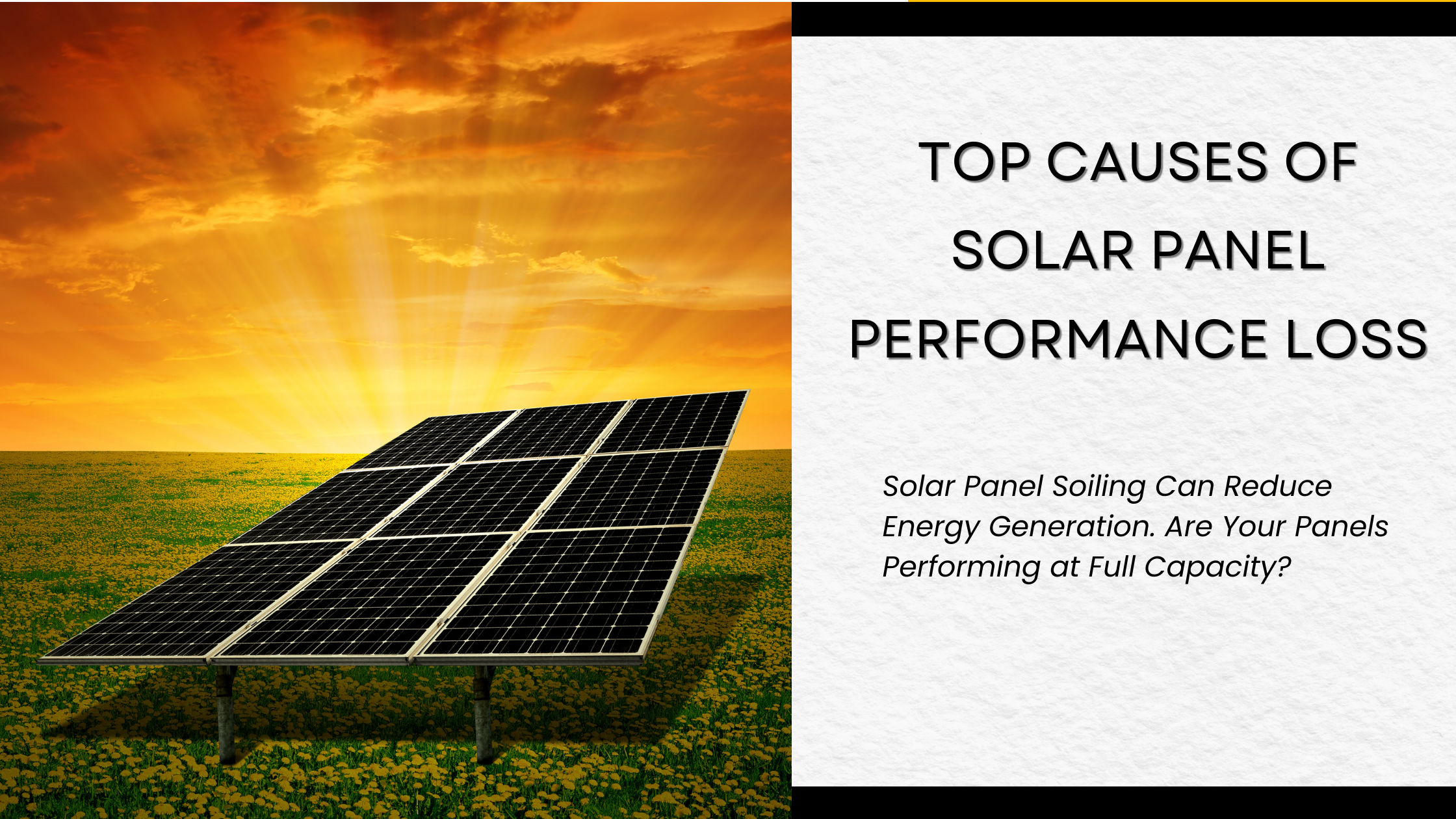
1. Why Solar Panel Performance Matters Solar energy has become one of the fastest-growing sources of renewable power across the […]

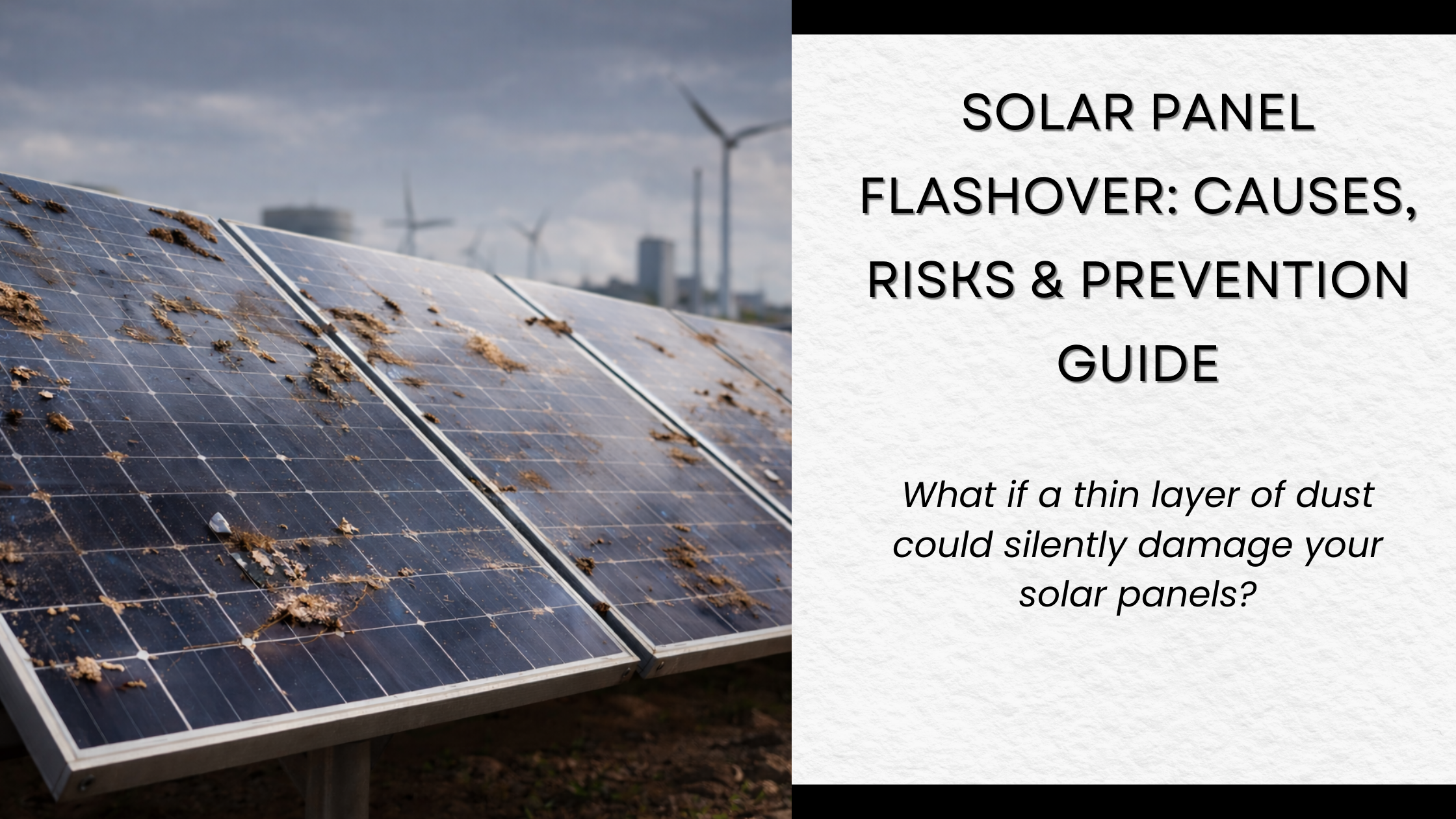
Solar energy systems are built to deliver reliable performance for decades. However, environmental factors such as dust, pollution, moisture, and […]

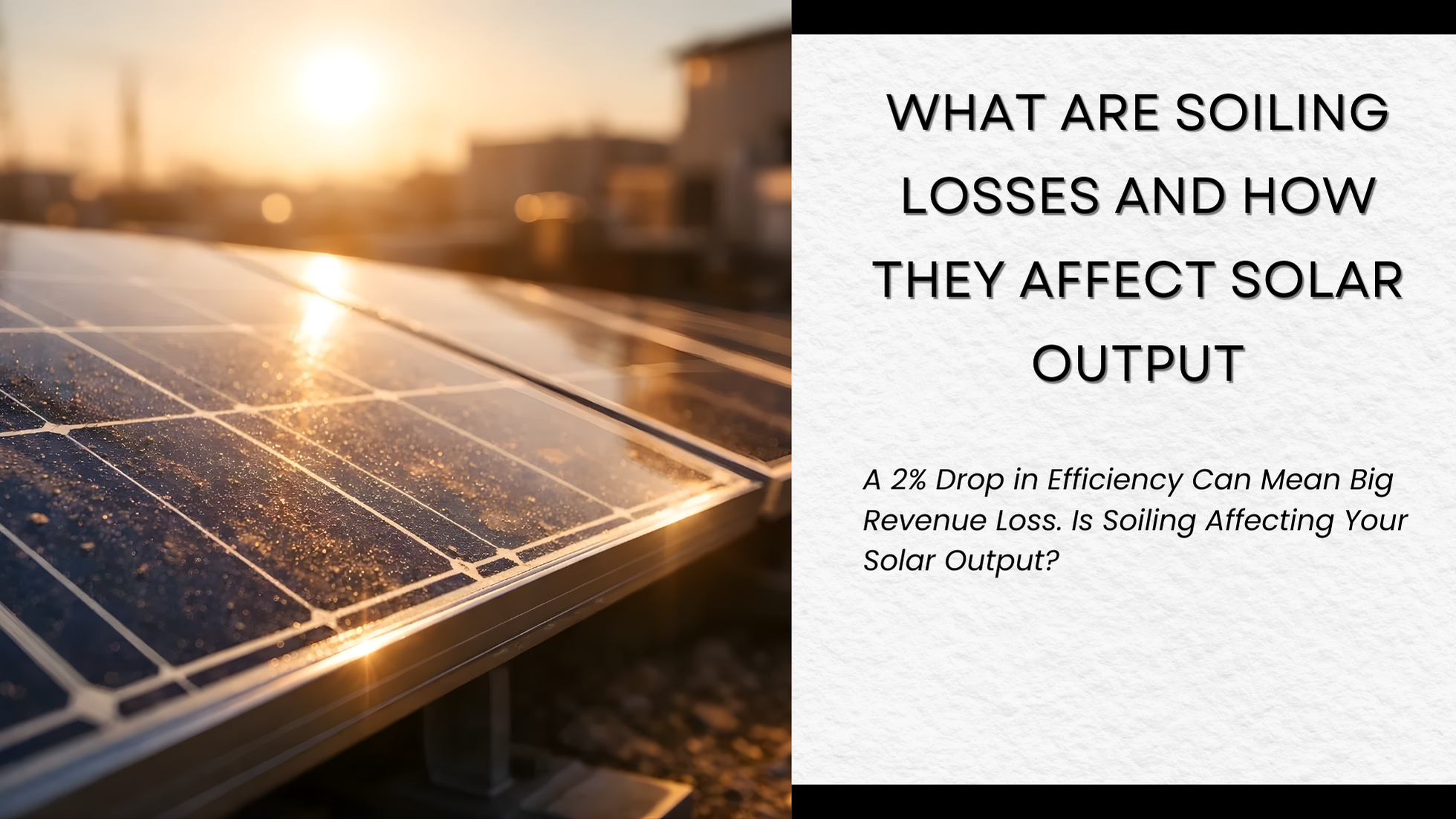
“Soiling losses in solar panels are one of the leading causes of efficiency decline, particularly in high-dust regions like India.” […]

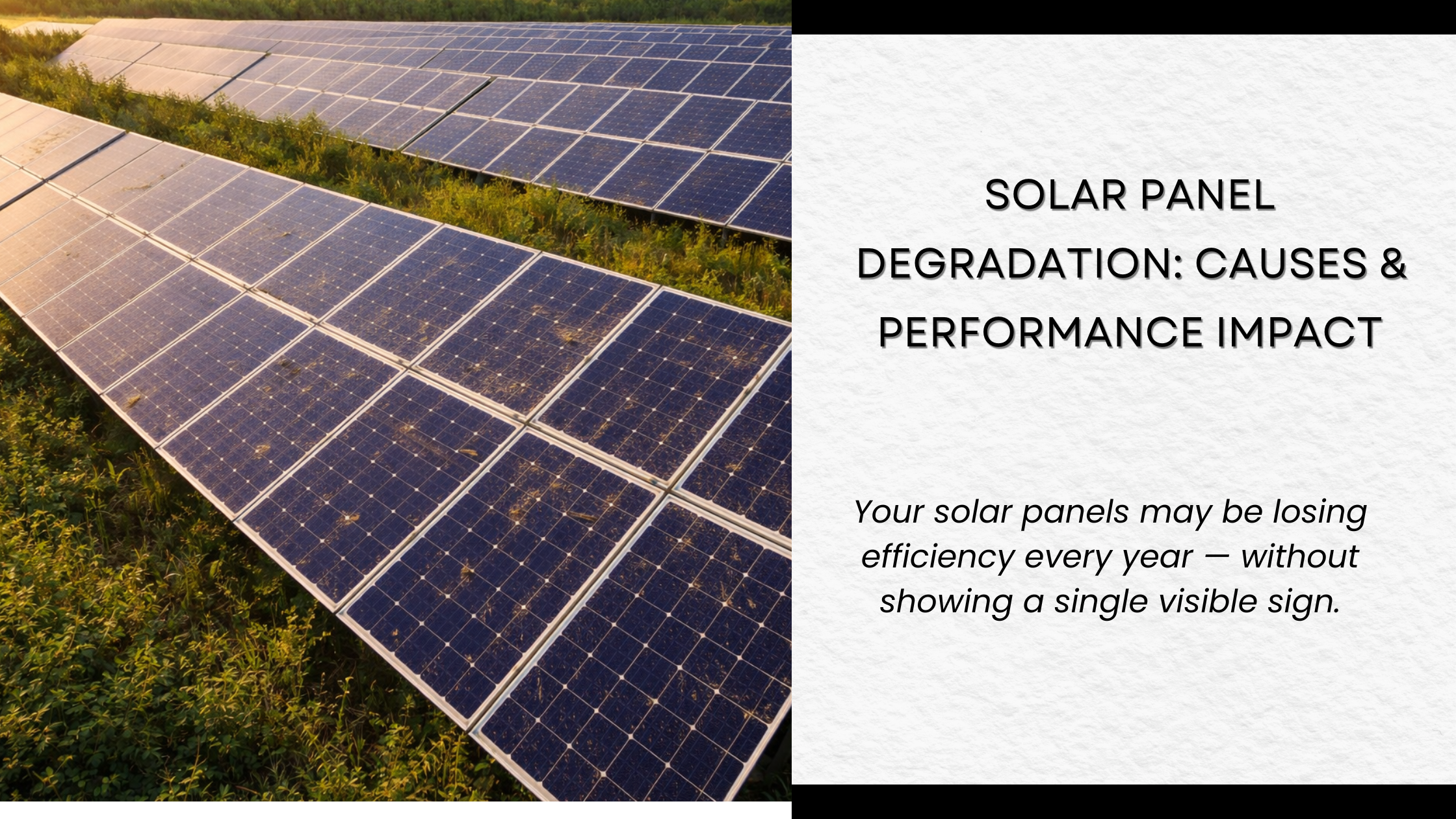
What Is Solar Panel Degradation and Why Does It Matter? Solar panel degradation is the gradual decline in solar panel […]

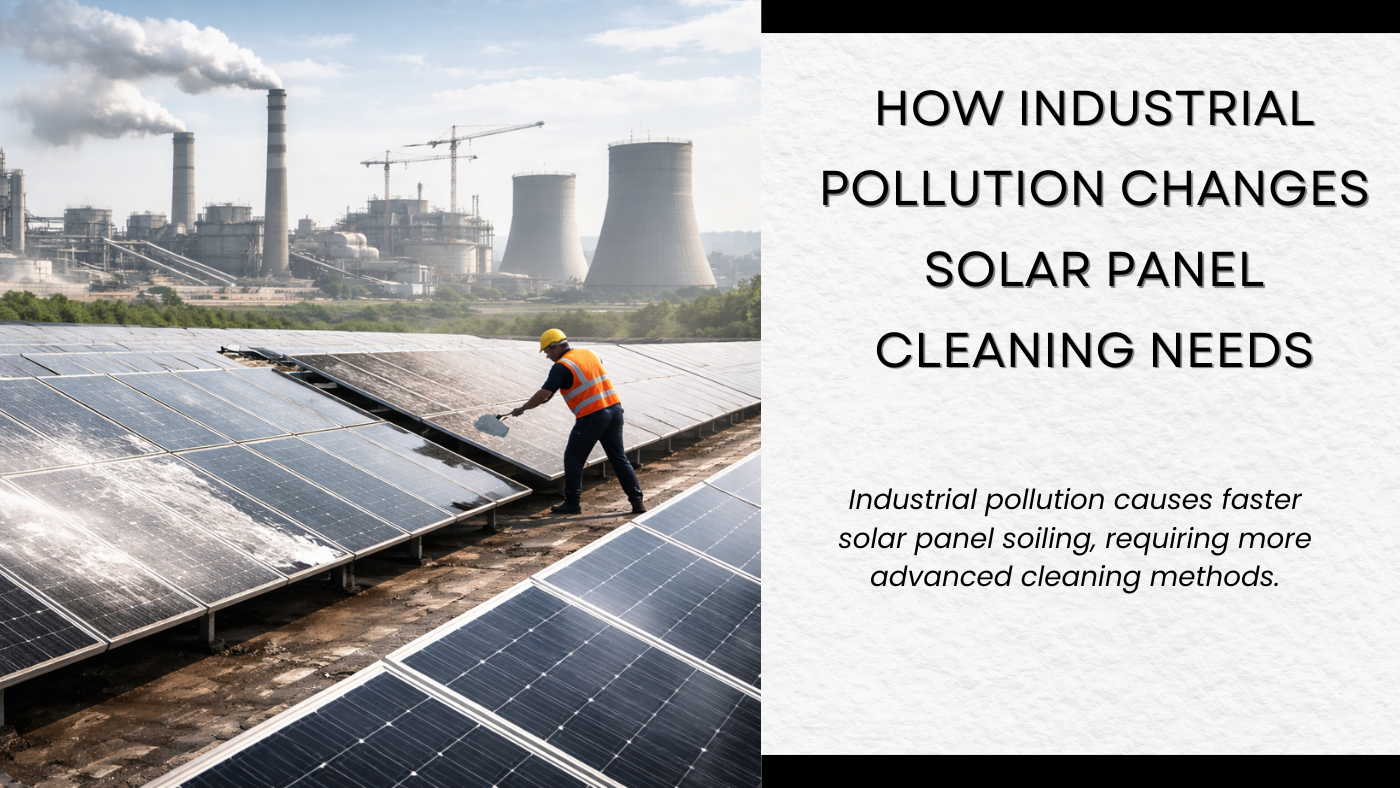
Industrial Pollution and Its Impact on Solar Panel Performance Rapid industrialization has led to the expansion of manufacturing hubs, cement […]

Why Module-Friendly Surfaces Matter for Solar Panel Performance Solar panel cleaning chemicals play a critical role in maintaining solar panel […]

Scroll to Top